What is recorded here
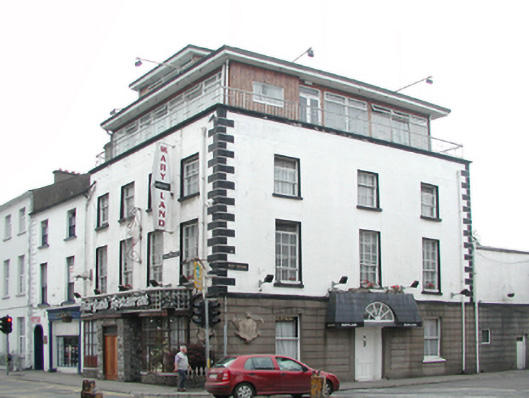
End-of-terrace four-bay three-storey flat-roofed house with double (four-bay two-storey) attic, c.1820, on a corner site originally four-bay three-storey retaining some original fenestration with three-bay three-storey side elevation to west. Extensively renovated, c.1970, with shopfront inserted to ground floor and tiered flat-roofed double (four-bay two-storey) attic added to accommodate use as hotel. Flat felt roofs, c.1970, (behind parapet to original portion) with rendered chimney stack, and timber eaves having replacement aluminium rainwater goods, c.1970. Unpainted rendered wall to ground floor side (west) elevation with channelling, and decorative cartouches. Painted rendered walls to upper floors with rendered quoins and rendered coping to parapet. Unpainted rendered walls to attic storeys with sections of tongue-and-groove timber panelling. Square-headed window openings to original block with stone sills. 3/6 and 9/6 timber sash windows. Square-headed window openings to attic storeys with concrete sills and timber casement windows. Segmental-headed door opening with fluted Doric doorcase, timber panelled door, and overlight under hipped artificial slate canopy incorporating round-headed fanlight. Stone-clad shopfront, c.1970, to ground floor with fixed-pane timber bow bay windows, tongue-and-groove timber panelled double doors, and timber lattice fascia over. Road fronted on a corner site with concrete footpath to front.
A prominently-sited house of Georgian proportions, which retains some of its original form and early fabric, including fittings to the window openings and a simple Classical-style doorcase. The cartouches, carved by William Charles May (n. d.), are of some artistic interest, and enhance the design quality of the composition. Radically altered in the late twentieth century, the inappropriate shopfront and the addition of two attic storeys have detracted considerably from the overall appearance of the house. The house is of additional significance in the locality for its historic associations with William Vincent Wallace (1812 - 1865), composer.
This does not grant access. Most recorded buildings are privately owned; view them only from public ground unless the owner allows entry.
Places near here
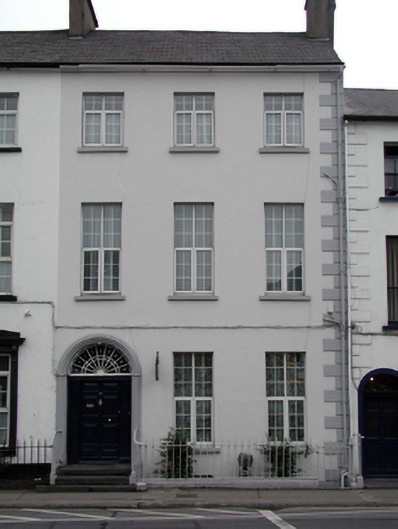 Derrynanehouse · 18 yd
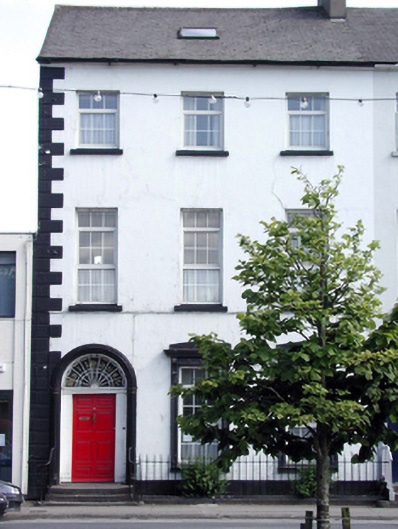 Mall Househouse · 27 yd
 9/11 MemorialMemorial · 61 yd
 Bishop's Palace MuseumMuseum · 80 yd
 Town defences in Waterford CityTown defences · 98 yd
 CathCathedral · 121 yd
 Medieval MuseumMuseum · 139 yd
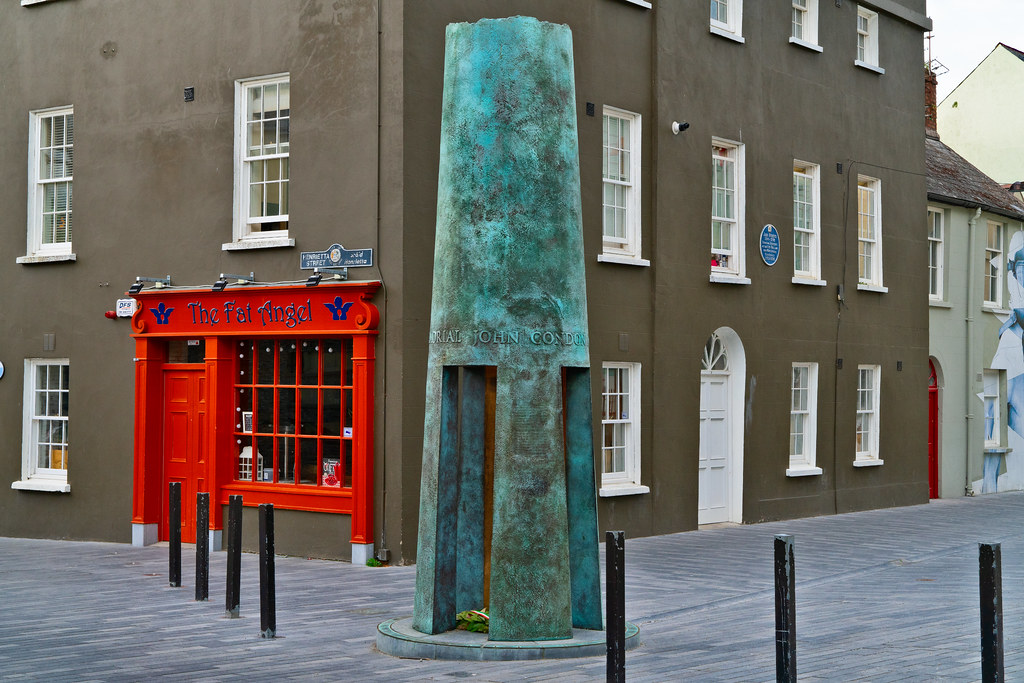 John Condon MemorialMemorial · 140 yd
 Viking TriangleVisitor information · 270 yd
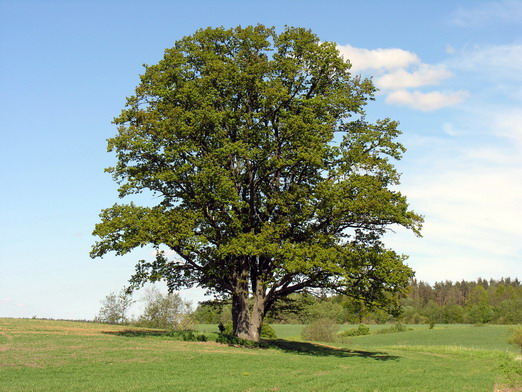 Pedunculate OakPedunculate Oak · 410 yd
 Beach TowerCastle · 508 yd
 Granny CastleCastle, tower house · 2.7 mi
Other information
Photo: National Inventory of Architectural Heritage · Website use allowed for educational or private purposes with source credit