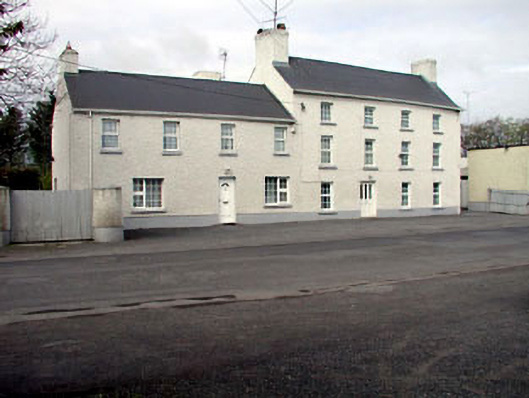
What is recorded here
Semi-detached four-bay three-storey house, c.1800. Extensively renovated, c.1990. Gable-ended roof. Replacement artificial slate, c.1990. Concrete ridge tiles. Roughcast chimney stacks. Replacement uPVC rainwater goods, c.1990, on roughcast eaves band. Roughcast walls. Painted. Square-headed openings. Stone sills. Replacement uPVC casement windows, c.1990. Glazed timber panelled door. Road fronted. Tarmacadam verge to front.Semi-detached four-bay two-storey house, c.1800. Extensively renovated, c.1990, possibly with window openings remodelled to ground floor. Gable-ended roof. Replacement artificial slate, c.1990. Concrete ridge tiles. Roughcast chimney stacks. Replacement uPVC rainwater goods, c.1990, on roughcast eaves band. Roughcast walls. Painted. Square-headed openings (window openings possibly remodelled, c.1990, to ground floor). Stone sills. Replacement uPVC casement windows, c.1990. Replacement glazed uPVC door, c.1990. Road fronted. Tarmacadam verge to front.
This pair of houses, while altered in the late twentieth century, retains most of its original character and prominent impact on the village of Prosperous. The houses are of social and historic significance, representing the early development of Prosperous as a planned village in the late eighteenth/early nineteenth centuries. Located to the south of the village, demarcating the central core, the houses are amongst the tallest structures in the streetscape. Composed of graceful proportions the substantial buildings were probably constructed by wealthy businessmen who capitalised on the presence of a textile factory in the locality. Despite their scale, however, the houses are little ornamented, presenting austere facades on to the street. This is compensated by the presence of multi-pane fenestration, however the re-instatement of timber fenestration (probably originally multi-pane sash) might restore a more accurate representation of the early appearance of the houses. It is possible that some early features survive to the interiors of both buildings.
This does not grant access. Most recorded buildings are privately owned; view them only from public ground unless the owner allows entry.
Places near here
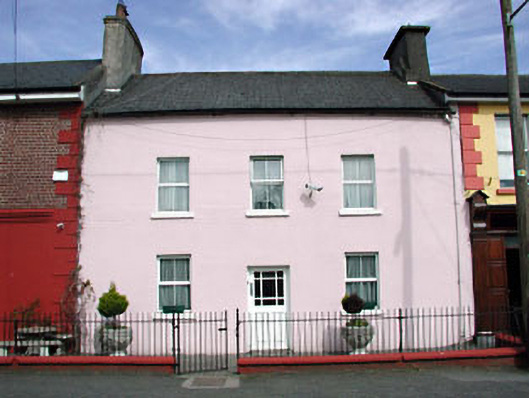 Brook Lodgehouse · 166 yd
 Catholic Church of Our Lady and Saint Josephchurch/chapel · 189 yd
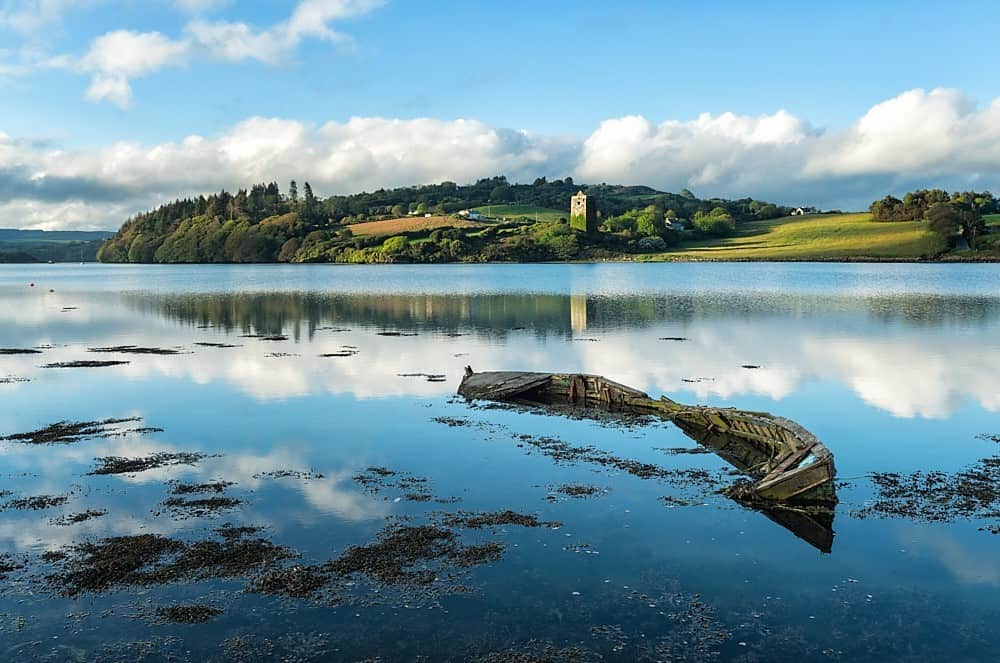 RaheenFairy fort / earthen ringfort · 364 yd
 Grand Canal WayWalking route · 624 yd
 Eldons FortFairy fort / earthen ringfort · 721 yd
 Ballynafagh Bog Special Area of ConservationNature reserve · 1.2 mi
 The Kildare MazeHeritage attraction · 1.3 mi
 IndicatedCastle, motte · 1.7 mi
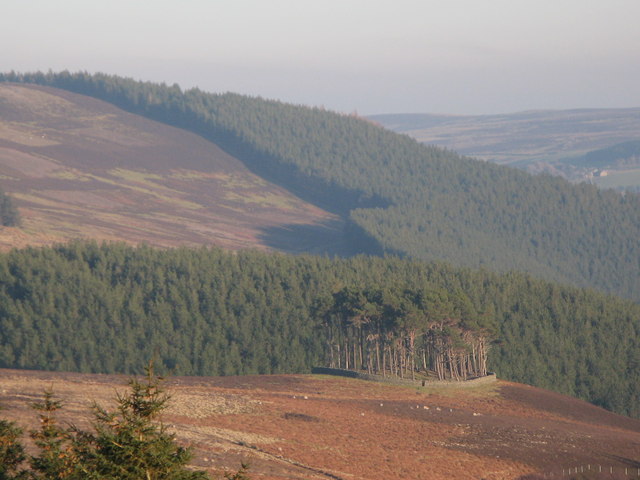 TumulusWood · 2.0 mi
 Blackwood Castle (in ruins)Castle, tower house · 2.3 mi
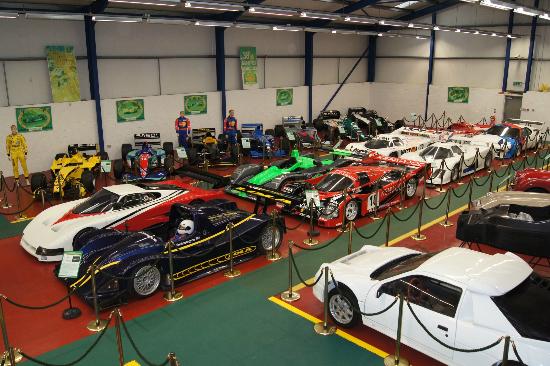 Museum of MotorsportMuseum · 2.3 mi
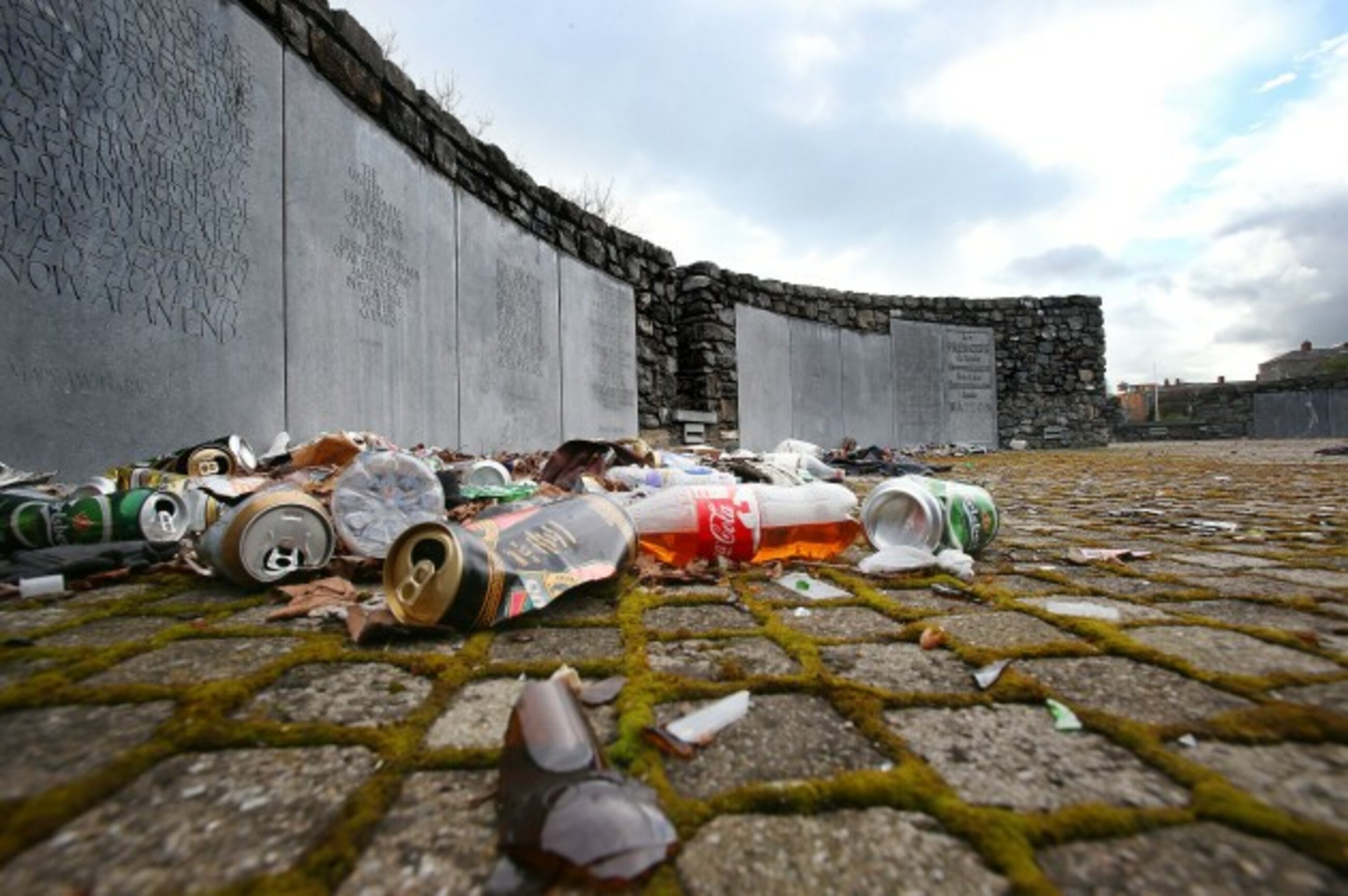 1798 Rebellion MemorialMemorial · 2.7 mi
Other information
Photo: National Inventory of Architectural Heritage · Website use allowed for educational or private purposes with source credit