What is recorded here
Inserted into a recess in the N wall of the current organ room, in the NE angle of the former nave of the medieval parish church of St John the Baptist (TS070-040001-), currently Holy Trinity C of I church. A rectangular limestone slab (L 2.18m; Wth 1.05m; T 0.07m - consisting of a staight edge D 0.04m and under-cut chamfer Wth 0.05m) decorated in relief with a seven-armed segmental-headed cross with fleur-de-lis terminals. There is a three-barred knop at the base of the cross-head and the base of the cross-shaft which rests on a pillar-base form. There is a shield on either side of the cross-shaft. The dexter shield bears three hackeds hauriant with the name 'Hacket' above and the sinister shield bears lozengy (rows of alternating lozenges) with the name 'Rokel' above (Crotty 2012, 24-6). The inscription, in latin, in Black Letter script, runs around the boarder, and continues along the cross-shaft, base and head. FitzGerald (1903, vol. 5, 451) gives an expanded transcription as: HIC JACENT EDMUNDUS HACKET ET ANNA ROKEL QUI / IN HUJ /US ECCLESIAE RESTAURACIONE PIE / OBIIT XXVIIo DIE MENSIS JULII ANo DNI MCCCCCVIII / VALETE SANCTORES /QUI /EXISTERUNT / SPES, which he translates as, 'Here lies EDMUND HACKET (and ANNA ROKEL) who [while engaged] in the restoration of this church piously died on the 27th of July, A.D. 1508. Farewell most saintly who existed'. The latin inscription continues, as transcribed by Garstin 1892 (ibid. 450): TESTIS ES CHRISTE QUOD HIC NON JACET IAPIS ISTE CORPUS UT ORNETUR SED UT SP[IRITU]S MEMORETUR. HIC QUI TU TRANSIS, MAGNUS, MEDIUS, PUER AN SIS PRO ME FUNDE PRECES [SIC NISI SUE ME] (SPES). Garstin (ibid. 451) also provides a free translation, 'Thou art witness, O Christ, that this / Stone does not lie here to adorn the / Body, but to call to mind the soul. Here do you who pass by - whether you are / A great fellow, an ordinary person, or a / Mere lad - pour forth prayers for me. Sic nisi sue me spes. valete sanctores qui existerunt. So shall your efforts be my hope farewell most saintly who existed'.
Compiled by: Jean Farrelly
Date of upload: 19 January 2012
Graveslab in Fethard is a medieval funerary monument, likely dating to the 13th to 15th century. Its significance lies in its association with the former medieval parish church and as a rare surviving example of early Christian burial art in the region.
The monument record does not grant public access. Check the route and ask the landowner before entering private land.
- What survives
- Recorded monument
Places near here
 Church in FethardChurch · 13 yd
 Holy Trinity Church (Fethard)church/chapel · 14 yd
 Grave YardGraveyard · 32 yd
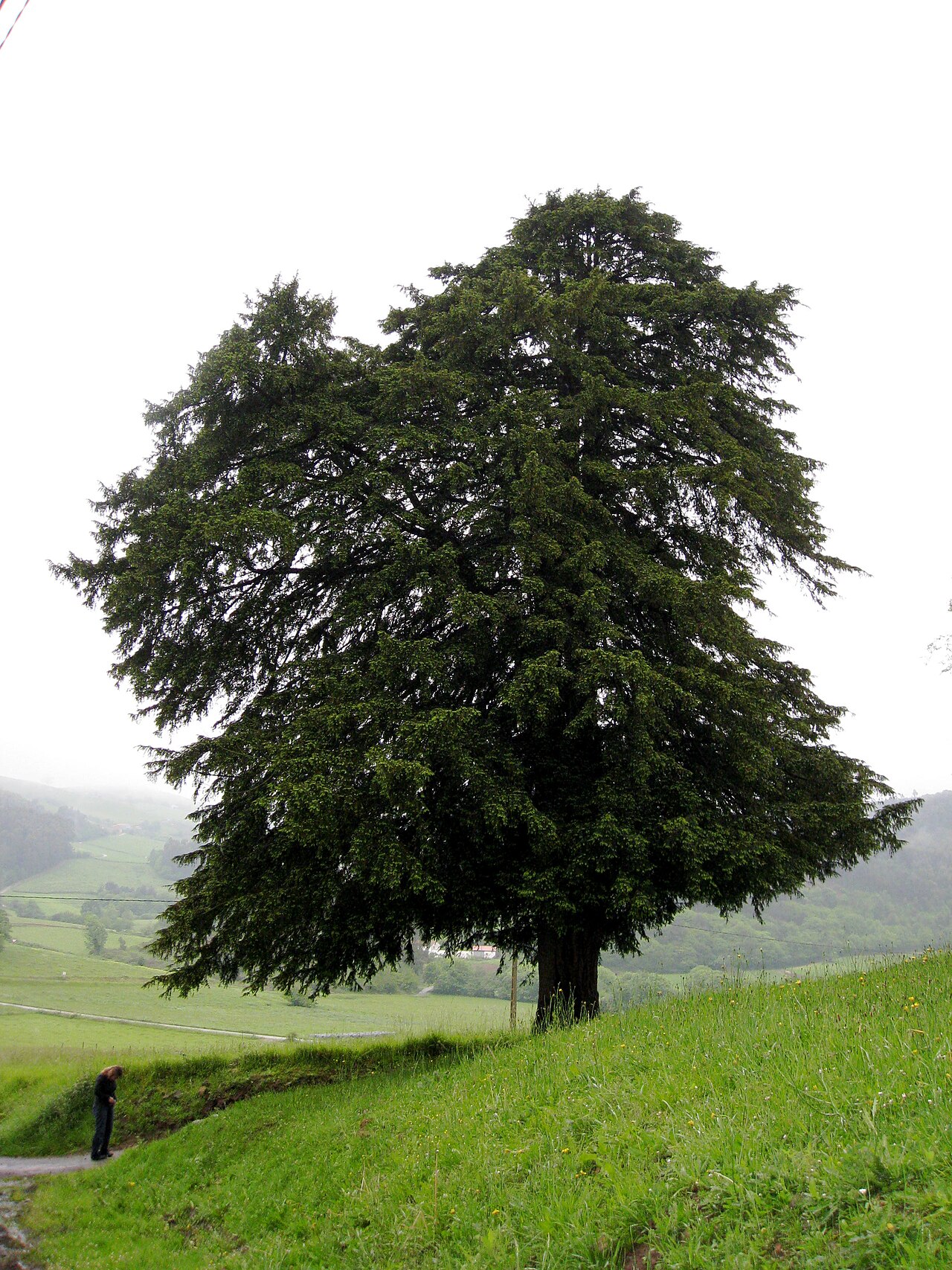 European YewEuropean Yew · 48 yd
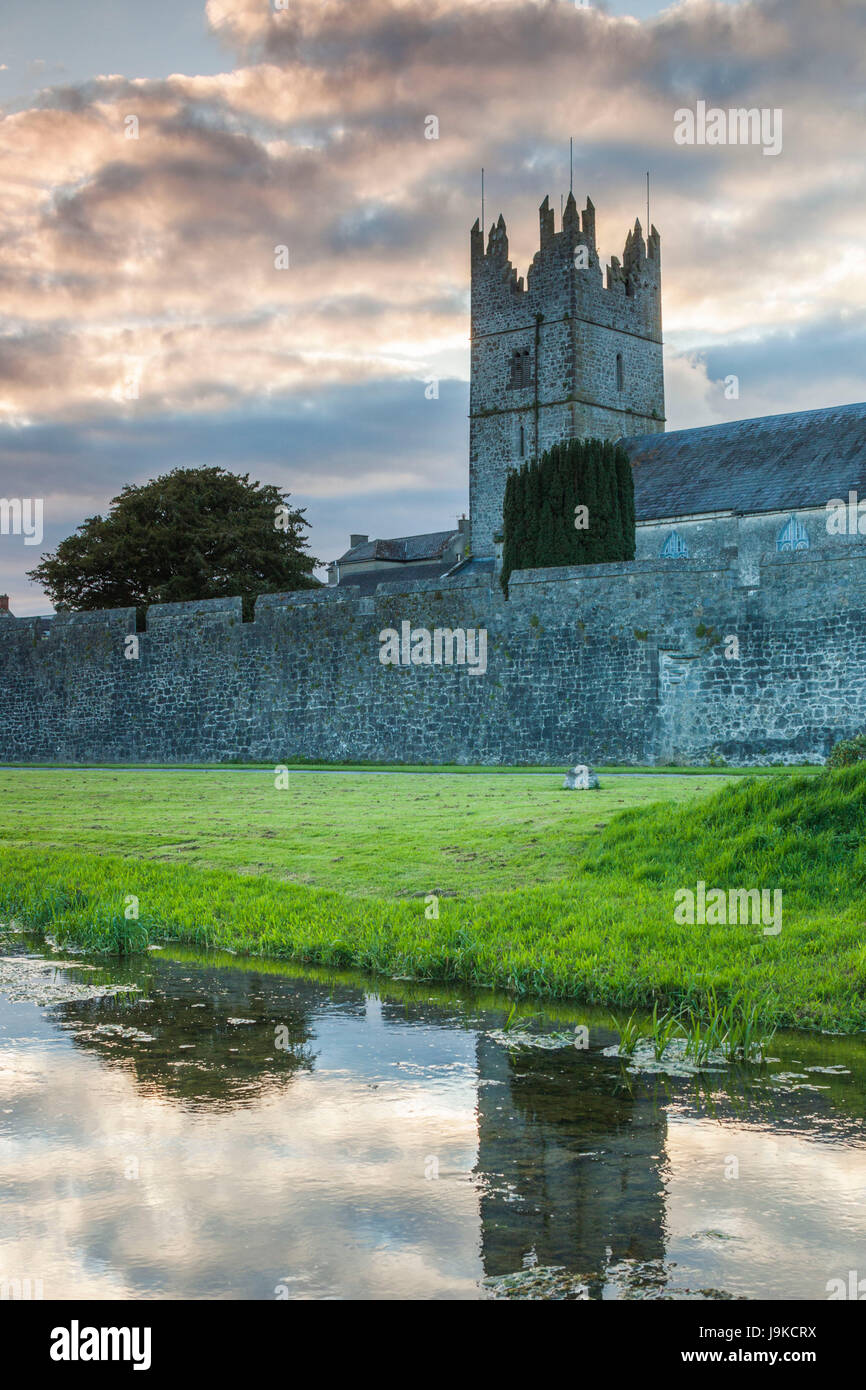 Almshouse in FethardAlmshouse · 48 yd
 Edmond's CastleCastle · 49 yd
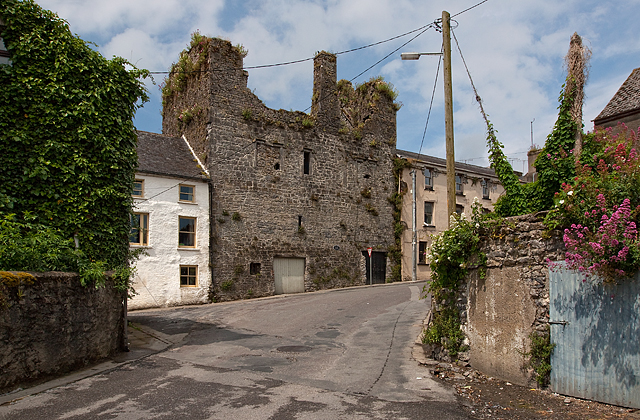 Court CastleCastle · 53 yd
 East GateMemorial · 177 yd
 Grove WoodForest · 1.1 mi
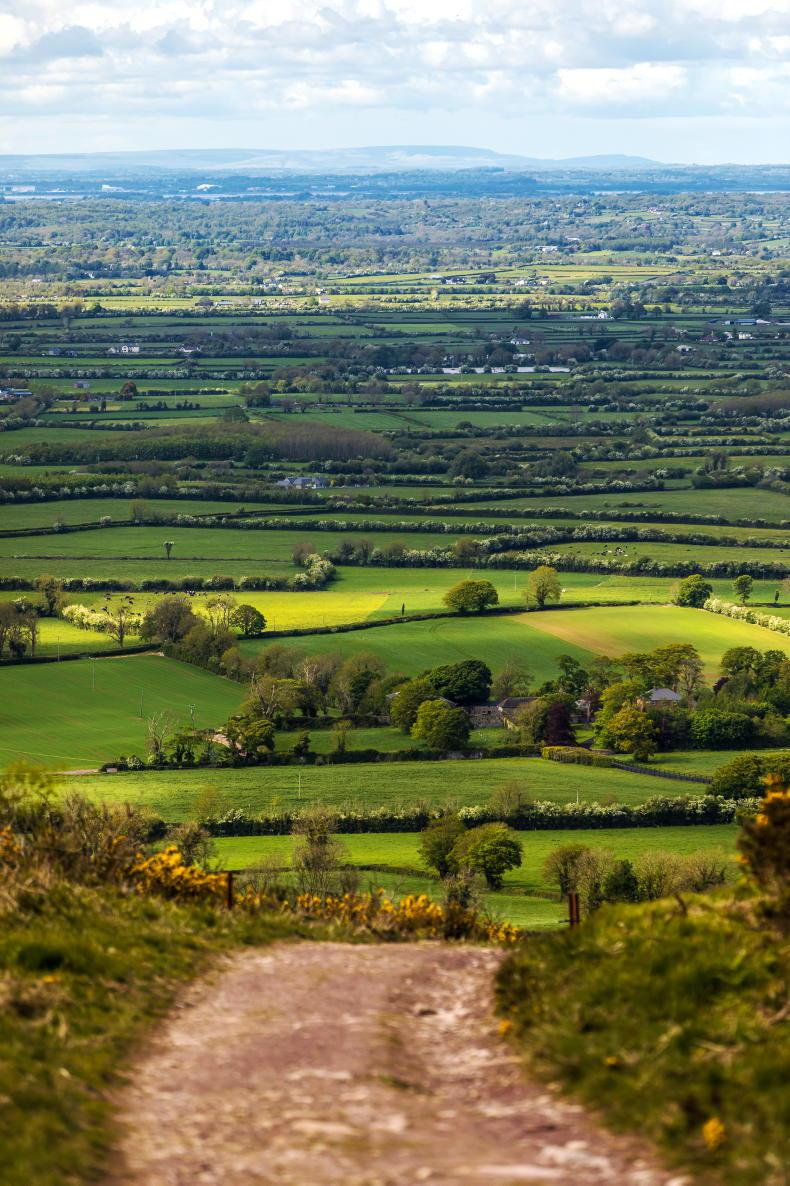 Kilknockan HillMountain / peak · 1.2 mi
 CarrigdotiaMountain / peak · 4.3 mi
 Fethard Town Hallalmshouse · 44 yd