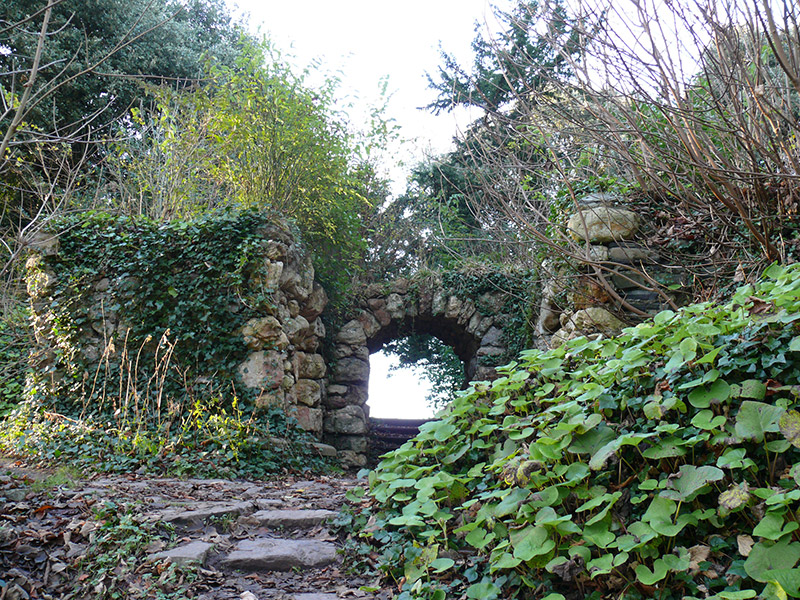
What is recorded here
Folly, built c. 1860, comprising segmental arch set within rubble stone wall, flanked by segmental arches to walls, set perpendicular to central arch to form U-plan. Rubble and cobble limestone and sandstone to walls. Two flights of nosed granite steps to west of arch, forming part of pathway to site of Saint Ann's house (no longer extant). Situated on elevated site overlooking entrance to Dublin Bay, accessed via splayed flights of rubble stone steps.
The steps to the west of this structure led towards the rear of St. Ann's, providing access to the glazed conservatory. The arches to the north and south were intended to frame views towards Howth and the Dublin mountains, respectively, although they are now largely enclosed by trees and overgrowth. This folly provides an interesting focal point on the landscape and is part of a group of rustic follies constructed at the behest of Benjamin Lee Guinness, as part of his landscaping of St. Ann's estate. It is representative of the nineteenth-century penchant for creating a sense of romance through the construction of sham ruins and follies in demesne landscapes, as well as creating vistas to and from the main house. Guinness, along with his brother Arthur, purchased the then Thornhill Estate in 1835, renaming it St. Ann's after a nearby ancient holy well. Benjamin later bought Arthur's share and considerably expanded the estate through several land acquisitions over the following decades. The collection of structures at St. Ann’s makes an important contribution to the built heritage of the area.
This does not grant access. Most recorded buildings are privately owned; view them only from public ground unless the owner allows entry.
Places near here
 Rustic ArchesMonument · 27 yd
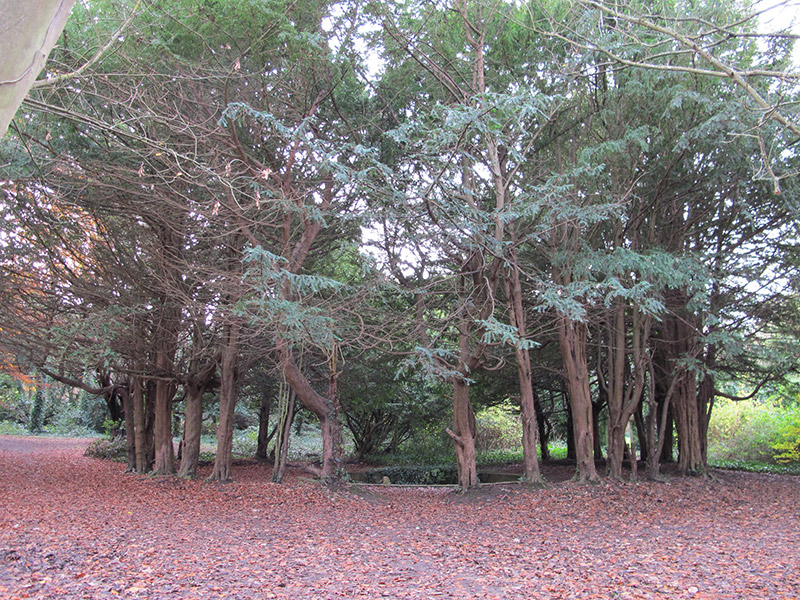 fountainfountain · 59 yd
 Rockwork Bridgefoot bridge · 64 yd
 Rockwork FeatureMonument · 86 yd
 Hermit's CaveMonument · 105 yd
 St. Annes WoodsWood · 242 yd
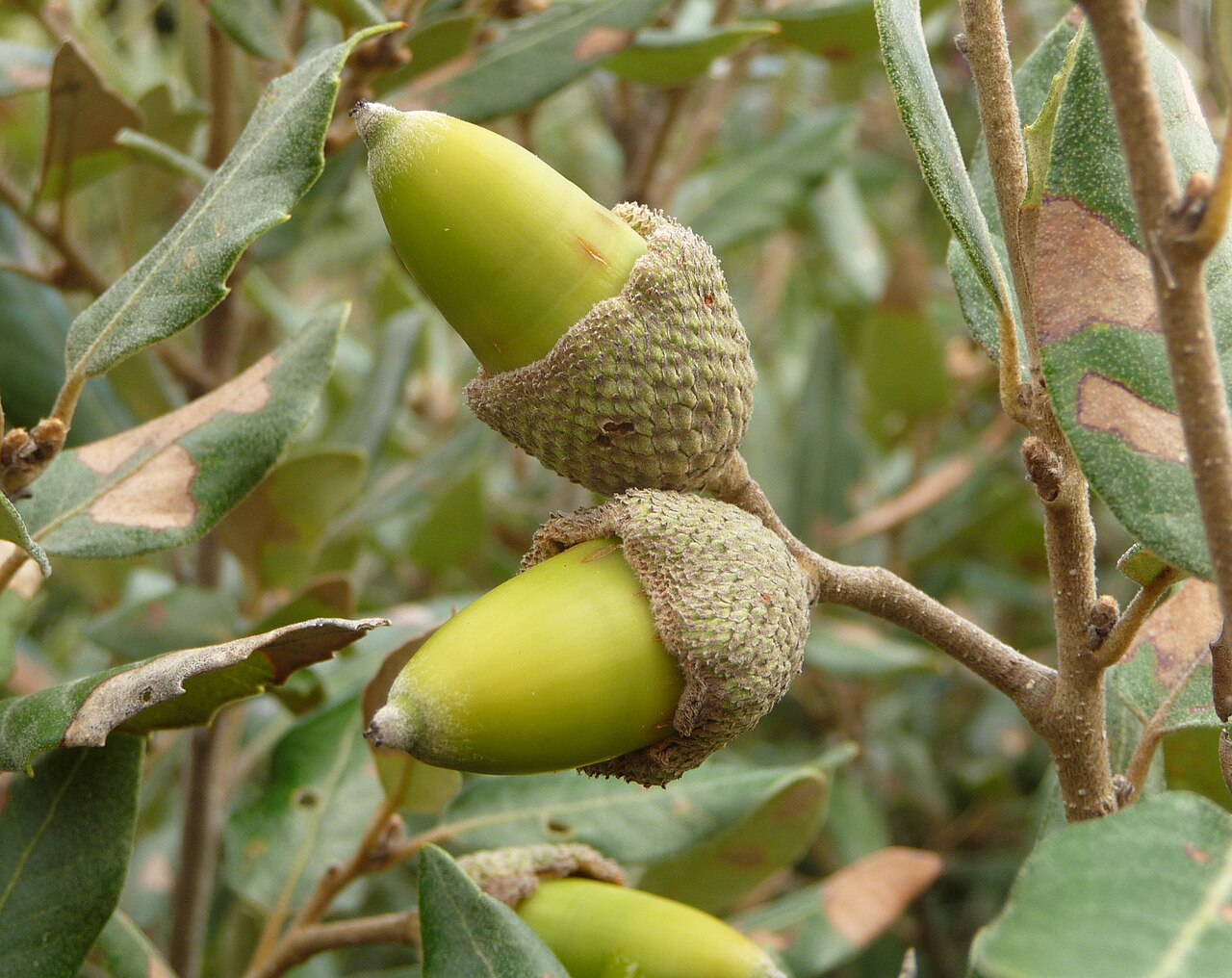 Holm OakHolm Oak · 251 yd
 Bull Island Nature ReserveVisitor information · 572 yd
 Battle of ClontarfMajor battlefield · 1.2 mi
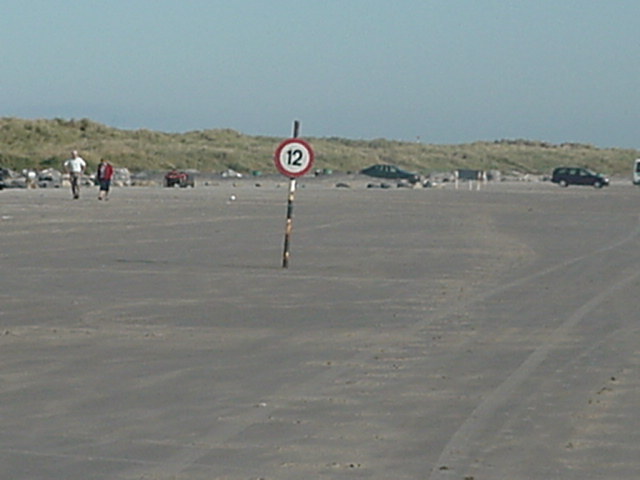 Dollymount StrandBeach / strand · 1.3 mi
 Clontarf War MemorialMemorial · 1.4 mi
 Clontarf Castle HotelVisitor information · 1.6 mi
Other information
Photo: National Inventory of Architectural Heritage · Website use allowed for educational or private purposes with source credit