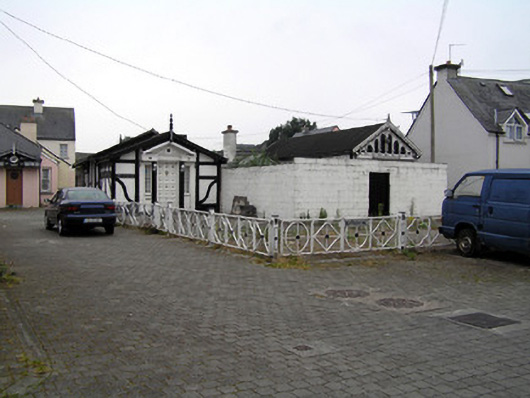
What is recorded here
A pair of gable-fronted multiple-bay single-storey timber-framed buildings, built c. 1930, distinguished by highly decorative and unusual timber cagework and barging. Joined by later flat-roofed accretions. The building to the east has a pitched artificial slate roof with timber finial to gable. A raised pitched roof to remainder with pan tile roof, further enriched by decorative timber bargeboards and finials. Timber cagework walls throughout with parging between. Square-headed window openings with concrete sills, timber architraves with console brackets and uPVC windows. To front entrance gable is a timber inscription reading: Dun an Oileain. To side is a course of quatrefoil timber panels. Portico doorcase with broken base pediment, possibly original to the structure, with replacement timber door and original margin-paned sidelights. West building has a pitched felt roof decorative timber finials and bargeboards containing decorative gables. Double-leaf timber doors with oval panels. Diamond-shaped panels to sides flanked by pilasters. This arrangement is rendered with a paint finish to rear and sides. As this building is unfenestrated, it may have functioned as a workshop.
A most unusual, if not unique, pair of early twentieth-century buildings of common origins, built in the idiom of the Elizabethan timber cagework house. It was built by an engineer from Germany who worked on the Ardnacrusha Hydro-electrical scheme. The structures are built on the site of the former Glue Manufactory, which as a roughly rectilinear yard enclosed by a collection of modestly-scaled buildings on each side, most of which no longer survive. It was entered through a carriage arch from River Lane.
This does not grant access. Most recorded buildings are privately owned; view them only from public ground unless the owner allows entry.
Places near here
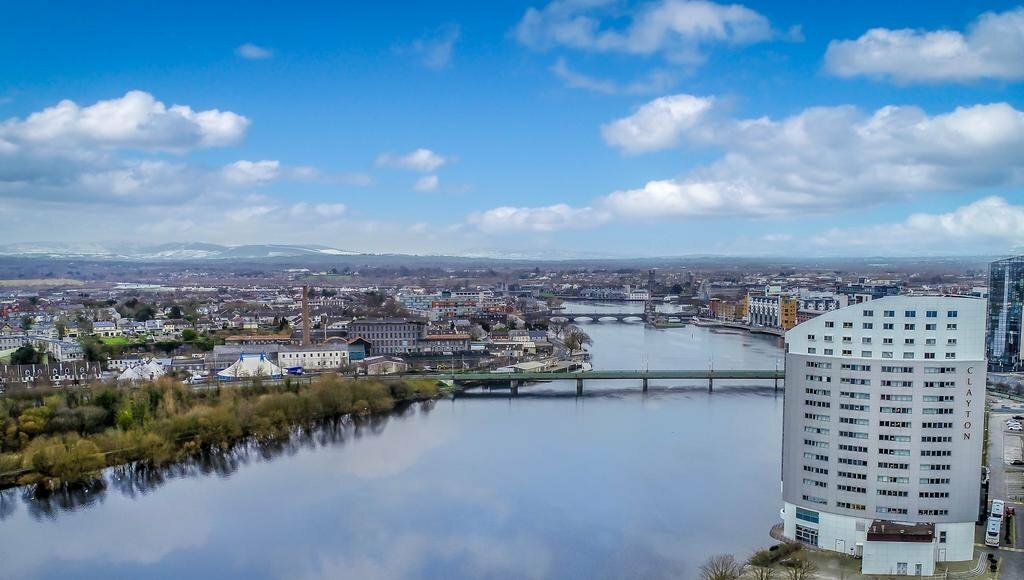 Kiln in Englishtown,limerick CityKiln · 54 yd
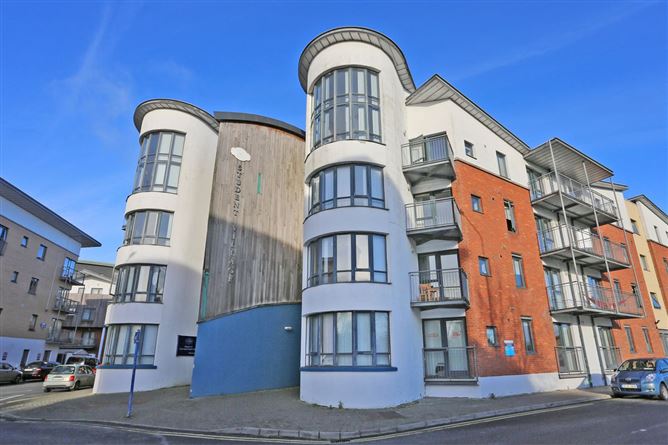 Grove IslandIslet · 144 yd
 Burial ground in Limerick City,saint Francis AbbeyBurial ground · 148 yd
 TholselRuins · 153 yd
 OutlinedCastle, tower house · 189 yd
 Bourke HouseHeritage attraction · 193 yd
 CrossCross, Market cross · 258 yd
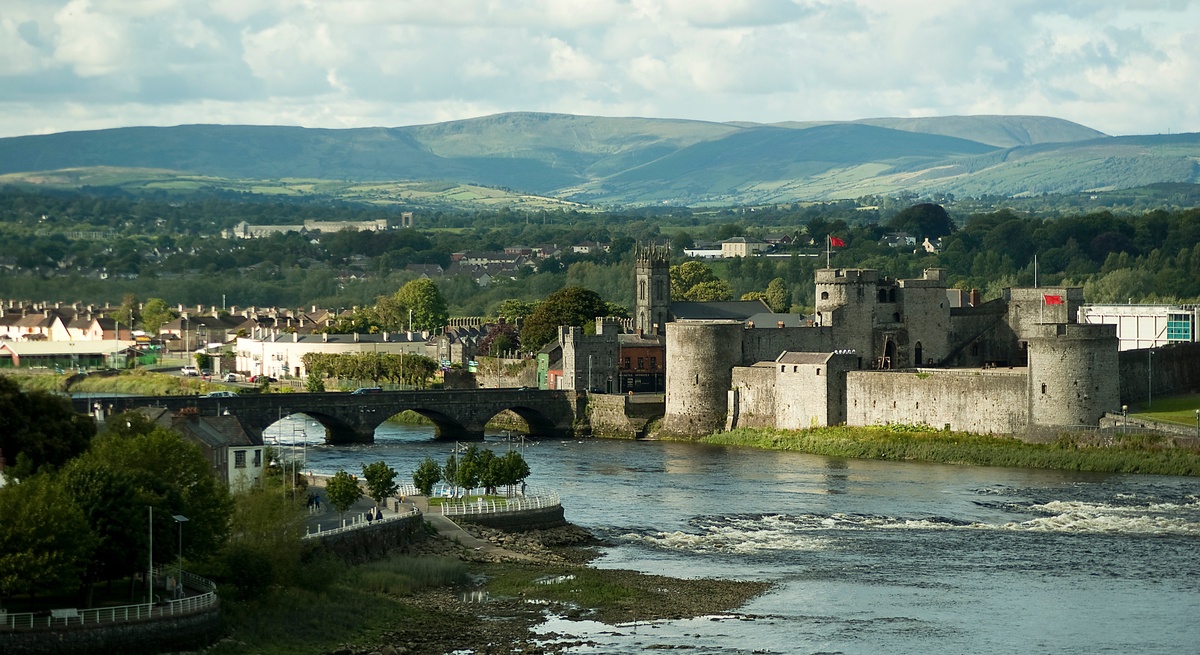 CastleCastle, unclassified · 274 yd
 Graveyard in Limerick CityGraveyard · 399 yd
 Hunt MuseumMuseum · 410 yd
 Siege of Limericksiege · 452 yd
 Michael HoganMemorial · 468 yd
Other information
Photo: National Inventory of Architectural Heritage · Website use allowed for educational or private purposes with source credit