What is recorded here
Dermot and Granias Bed is a passage tomb in Glen (leyny By.), County Sligo, Ireland. It stands on the narrow summit of Croaghaun Mountain, about 2km south of Ballysadare Bay, where a SE-facing chamber sits inside a circular cairn. Excavation in 1985 revealed cremated human bone, chert tools, pottery fragments and a prehistoric boulder wall curving around the mountain base nearby.
Some 2km S of Ballysadare Bay on the narrow summit of Croaghaun Mountain which commands an extensive outlook in all directions. A SE-facing undifferentiated passage tomb of rectangular outline (L 1.7m; Wth 0.95m) stands in a circular cairn (diam. 7m; H. c. 0.6m). Three stones form the left-hand side of the structure, one stone of a probable original three stands at the right-hand side and it is closed by a backstone. A sillstone stands at the front of the chamber. The site was excavated in 1985 (Bergh 1986, 35; Bergh 1995, 104-5, 225). Cremated human bone was found in the chamber and also a fragment of a poppy-headed antler/bone pin, one piece of chert with wear-marks and fragments of a coarse ware pottery. Five minor deposits of cremated bone were found in the cairn with one of which there were sherds of food vessel type. A hollow scraper made of chert was also found in the cairn. During the excavation two displaced slabs, likely to have been chamber roofstones, were found S and W of the structure. Radiocarbon dating of charcoal from an in situ cremation suggest it was deposited in the interval 5640 to 5490 BC (calendar years). This date is much earlier than would be expected for a passage-tomb so it may be that charcoal already many centuries old somehow became associated with the burial deposit. Charcoal associated with cremated bone in another part of the chamber has been dated to the interval 4675-4460 cal. BC. This date too, according to the excavator, presents 'problems of interpretation'. A prehistoric wall (Wth 3-8m; H c. 1m; L c. 175m) (SL020-182----) of large boulders, which may have been associated with the passage tomb, lies c. 130m to S where it curves around the base of the mountain roughly SE-SW (Bergh 1986, 34-5). (Ó Nualláin 1989, 93-4)
The above description is derived from the published 'Archaeological Inventory of County Sligo' compiled by Ursula Egan, Elizabeth Byrne, Mary Sleeman with Sheila Ronan and Connie Murphy (Dublin Stationery Office, 2005).
Date of upload: 18 January 2008
See linked document with details from Seán Ó Nualláin, Survey of the Megalithic Tombs of Ireland. Volume V. County Sligo. (Dublin: Stationery Office, 1989)
A SE-facing undifferentiated passage tomb, dating to the Neolithic period. Its location on Croaghaun Mountain suggests it may have had ceremonial or ritual significance due to its commanding view of the surrounding landscape.
The monument record does not grant public access. Check the route and ask the landowner before entering private land.
- What survives
- Recorded monument
Places near here
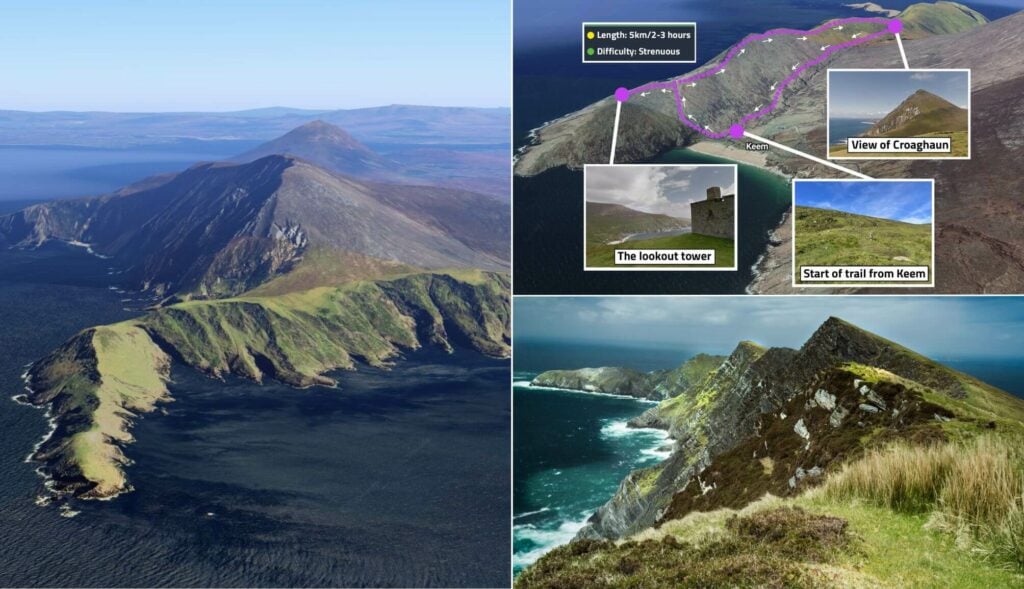 CroaghaunMountain / peak · 6 yd
 IndicatedFairy fort / stone ringfort · 584 yd
 Enclosure in Glen (leyny By.)Enclosure · 589 yd
 SlievewardMountain / peak · 1.1 mi
 Kildalough Church (in Ruins)Church · 1.1 mi
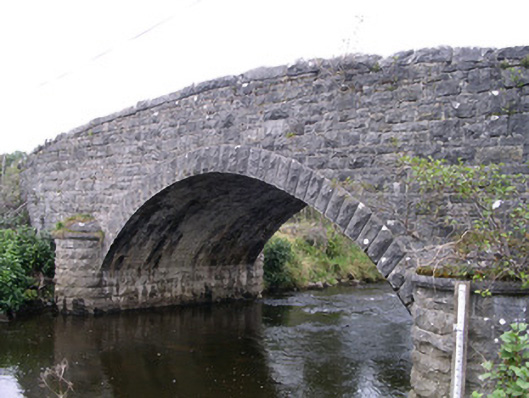 Billa Bridgebridge · 1.1 mi
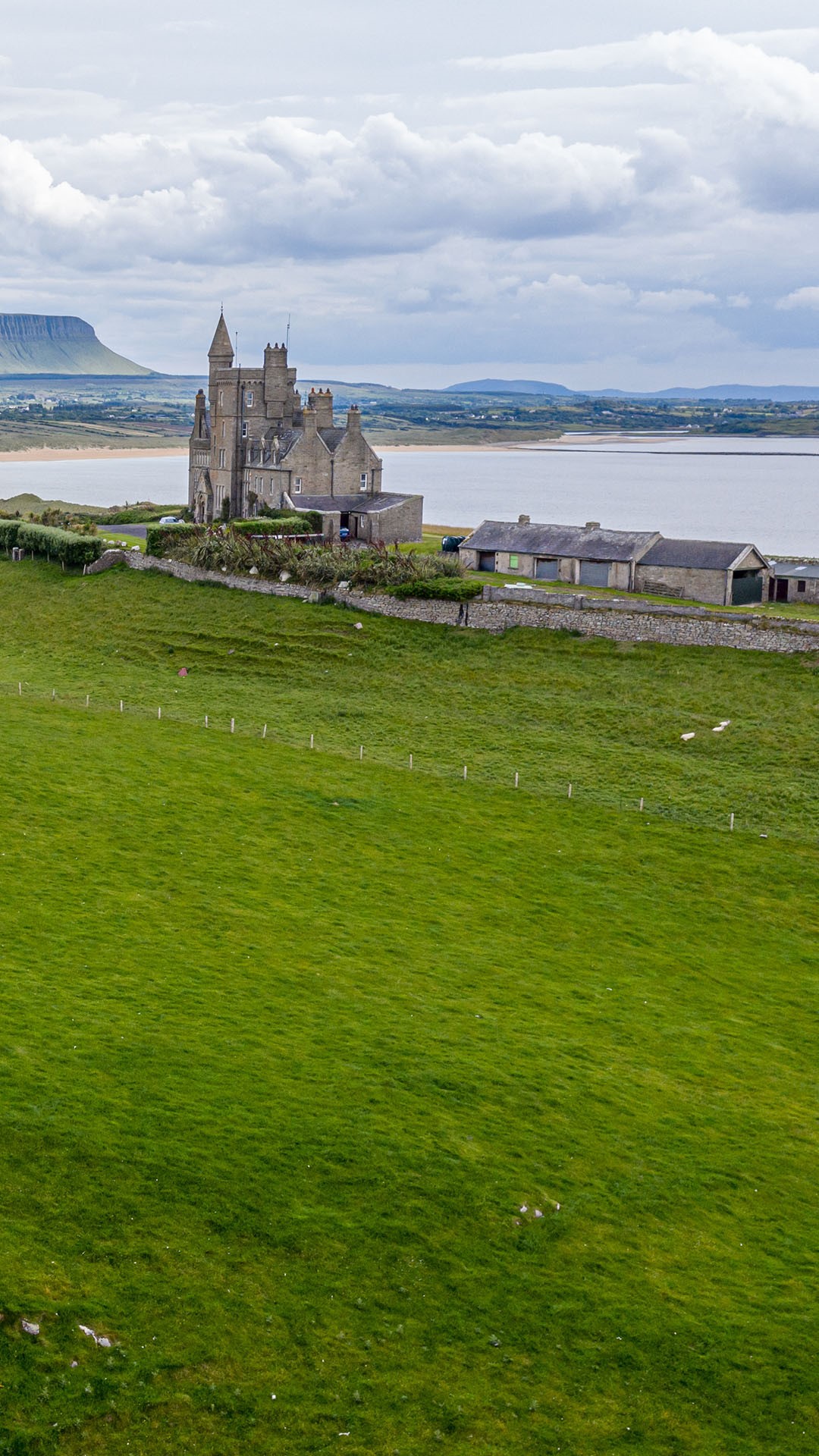 Moymlough Castle (in Ruins)Castle, tower house · 1.6 mi
 RinnatalleenHeadland · 1.6 mi
 CastleCastle, unclassified · 2.1 mi
 Derinch PointHeadland · 2.3 mi
 Battle of Collooneybattle · 2.7 mi
 Teeling MonumentMemorial · 2.7 mi