What is recorded here
A thin sandstone slab, half a metre across and no thicker than a knife, lies buried inside a ceallúnach grave at the Riasc oratory. Someone cut a Maltese cross into its face and set a small bird in the upper corner, perhaps a peacock, before later hands dragged the stone from its first purpose and forced it to hold a dead body instead. The cross became a tomb, the tomb became a room, and the room became a field where the shapes still wait beneath the grass.
This cross-slab (Stone H; see KE042-060022-) was found reused as part of a ceallúnach grave within the oratory at Riasc. It is a thin sandstone slab (L 0.85m. W 0.4m. T 0.05m) squared at the top and tapered along its length. The smooth-dressed face bears a recessed design consisting of a Maltese cross within a square frame. In the upper right-hand angle is a small stylised representation of a bird (probably a peacock), originally one of an opposed pair. .
The above description is derived from J. Cuppage, Corca Dhuibhne. Dingle Peninsula archaeological survey. Ballyferriter. Oidhreacht Chorca Dhuibhne’ (1986), no. 874.
Updated by: Paul Walsh
Date of upload: 10 November 2014
This cross-slab likely dates to the early medieval period, associated with Christian monastic or ecclesiastical activity in the region. Its reuse in a ceallúnach grave suggests continuity of sacred or commemorative use over time.
The monument record does not grant public access. Check the route and ask the landowner before entering private land.
- What survives
- Recorded monument
Places near here
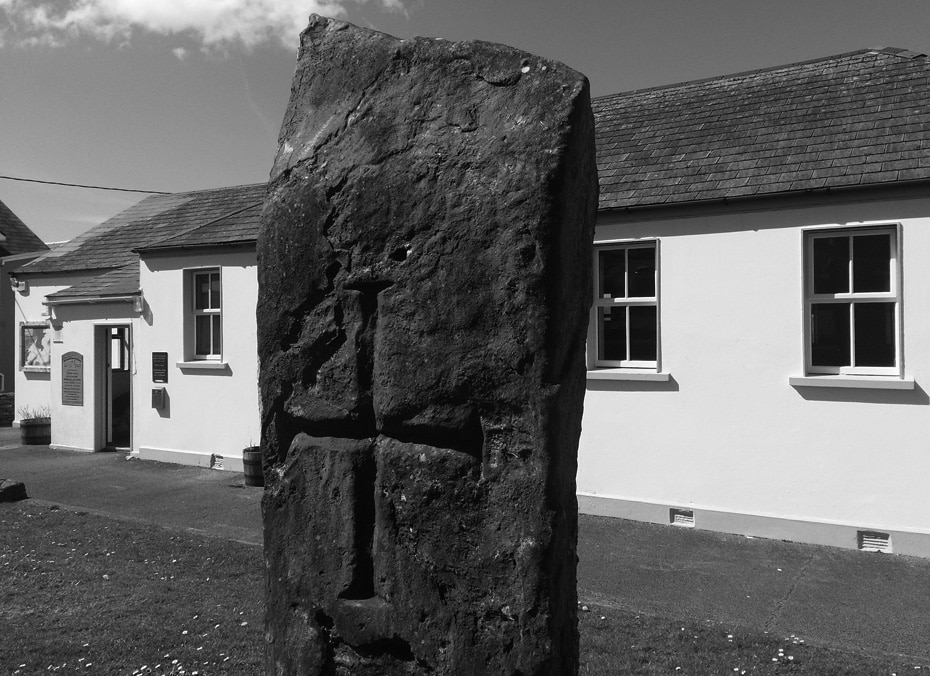 Músaem Chorca DhuibhneMuseum · 2 yd
 Séipéal Uinseann Naofa [Saint Vincent's Catholic Church]church/chapel · 47 yd
 Man-made underground passage in Gort MórMan-made underground passage · 159 yd
 Ballineanig HillMountain / peak · 437 yd
 St. Brendans WellHoly well · 570 yd
 St Brendan's WellSpring · 622 yd
 Penitential station in Baile An BhaoithínPenitential station · 964 yd
 Riasc Monastic SettlementHeritage attraction · 1379 yd
 Tráigh Bhéal BánBeach / strand · 1.1 mi
 Trá an FhíonaBeach / strand · 1.2 mi
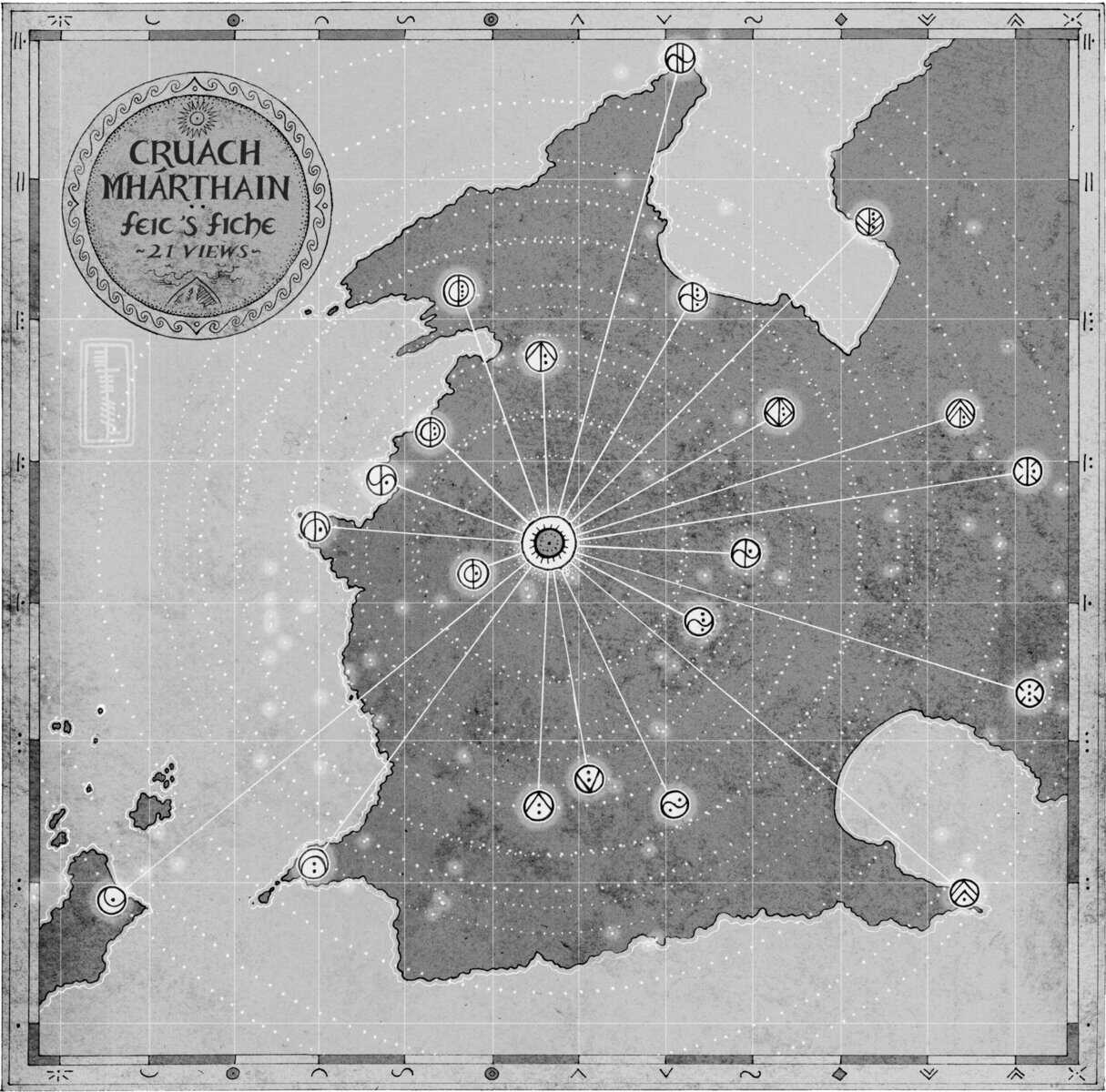 Cruach MhárthainMountain / peak · 1.6 mi
 Dunanoir FortVisitor information · 1.7 mi