What is recorded here
One granite slab, broken into two parts, forms part of the ceiling in the Monks' Walk at St Patrick's Cathedral, County Dublin. Thomas Drew mistook the fragments for separate tombstones in 1901, but a ringed Greek cross and long shaft link them as one wheel-headed marker. The slab hangs overhead like a forgotten door, inviting people to walk beneath buried death and imagine whose hands last held it.
One of six cross-slabs (DU018-278-/283-) now located inside St Patrick’s Cathedral (DU018-020269-). Granite slab (L 1.6m x Wth 0.56m x T 0.12m) that is broken into two parts and built into the ceiling of the triforium passage at the SE corner of the S transept of St Patrick’s Cathedral (DU018-020269-). Described in 1901 by the Cathedral Architect, Thomas Drew, who thought the two broken pieces were two separate slabs rather than two fragments of the same slab. Thomas Drew (1901, 296) described the location of these slabs in 1901 as follows; ‘The ceiling of the triforium passage, familiarly known as the "Monks' Walk," which bonds an inner to an outside wall, is formed of great flagstones. Three of these have been observed to be ancient granite tombstones, with raised crosses cut on them, identical in character with the St. Patrick's Well stone [DU018-282----]’. The decoration consists of a ringed Greek cross in incised outline with recessed quadrants. Below it is a long shaft which terminates at the other end with short transverse arms. The overall effect is of a wheel-headed cross (Swords 2009, No. 4, 74).
Compiled by: Caimin O'Brien
Likely dating to the early medieval period (8th–11th century), this cross-slab may have originally served as a Christian memorial or waymarker. Its reuse in the cathedral suggests continued religious significance, though specific iconography or inscriptions are not described, limiting interpretation of its original meaning or folklore.
The monument record does not grant public access. Check the route and ask the landowner before entering private land.
- What survives
- Recorded monument
Places near here
 Cathed., St. PatricksCathedral · 1 yd
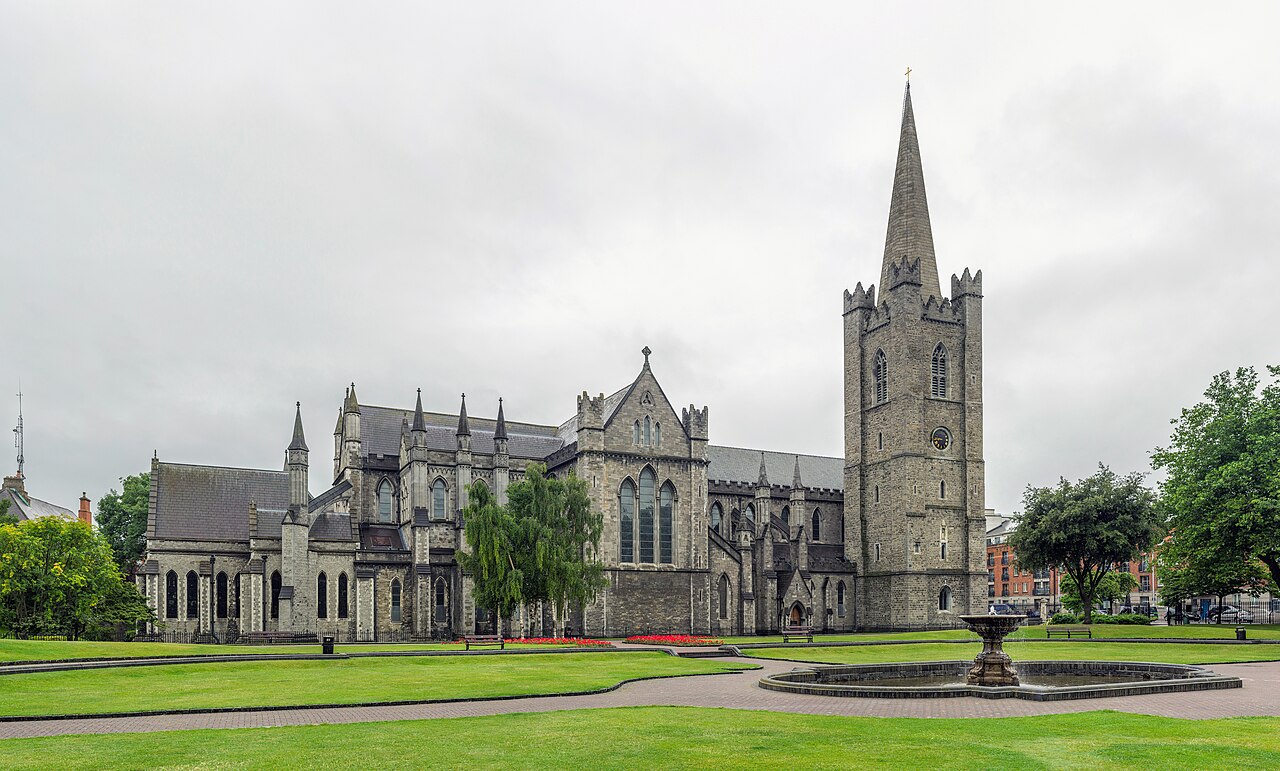 Saint Patrick's CathedralHeritage attraction · 13 yd
 Font in Unknown TownlandFont · 49 yd
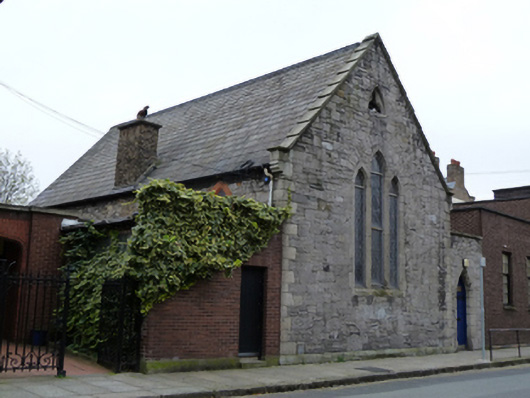 Saint Patrick's Cathedral Choir Schoolschool · 54 yd
 Marsh's Librarylibrary/archive · 65 yd
 Site of Saint Patrick's wellMemorial · 78 yd
 Litterary paradeMemorial · 114 yd
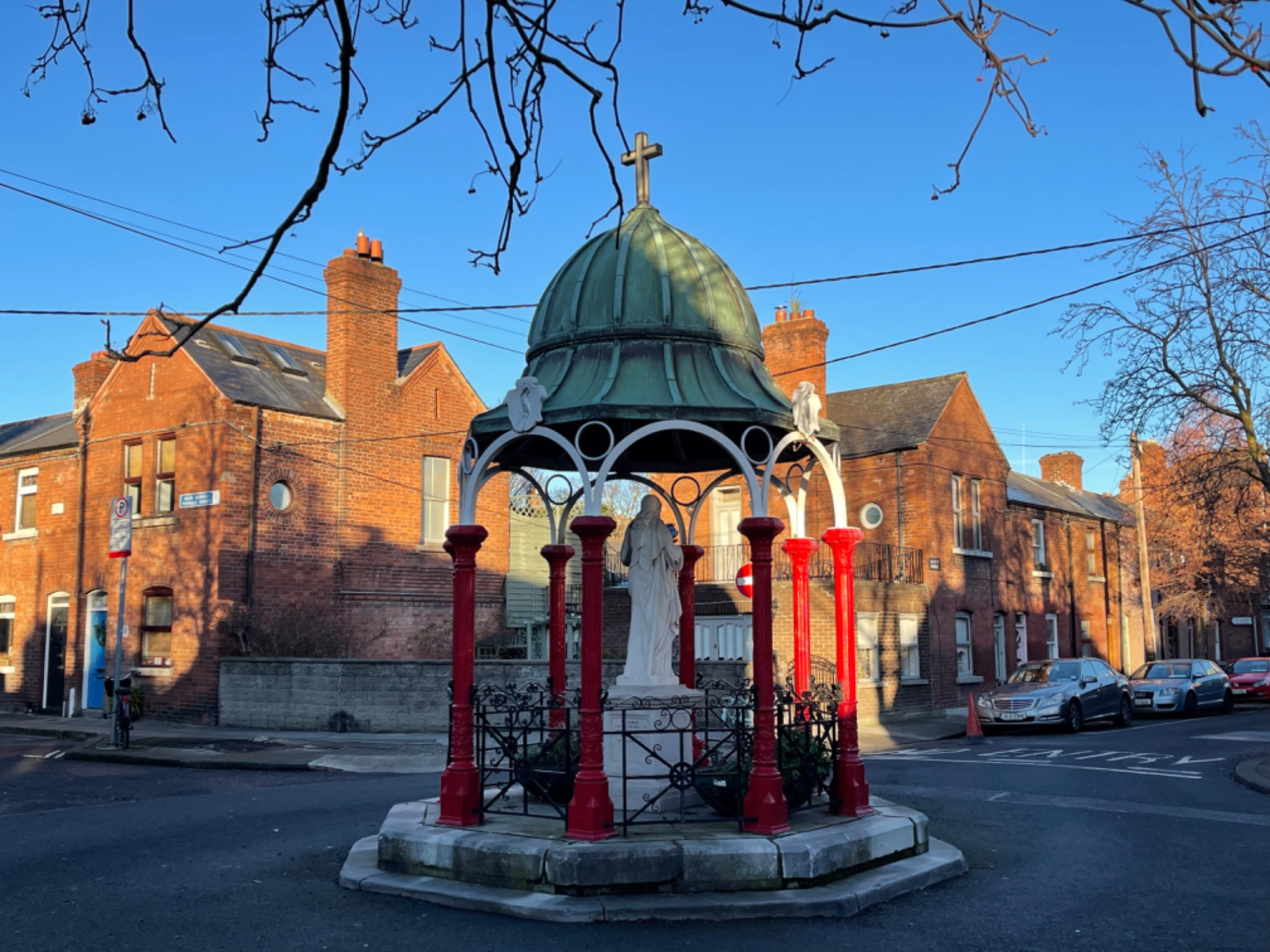 Pallas StudiosGallery · 240 yd
 Medieval DublinVisitor information · 526 yd
 Battle of DublinMajor battlefield · 552 yd
 European PearEuropean Pear · 1055 yd
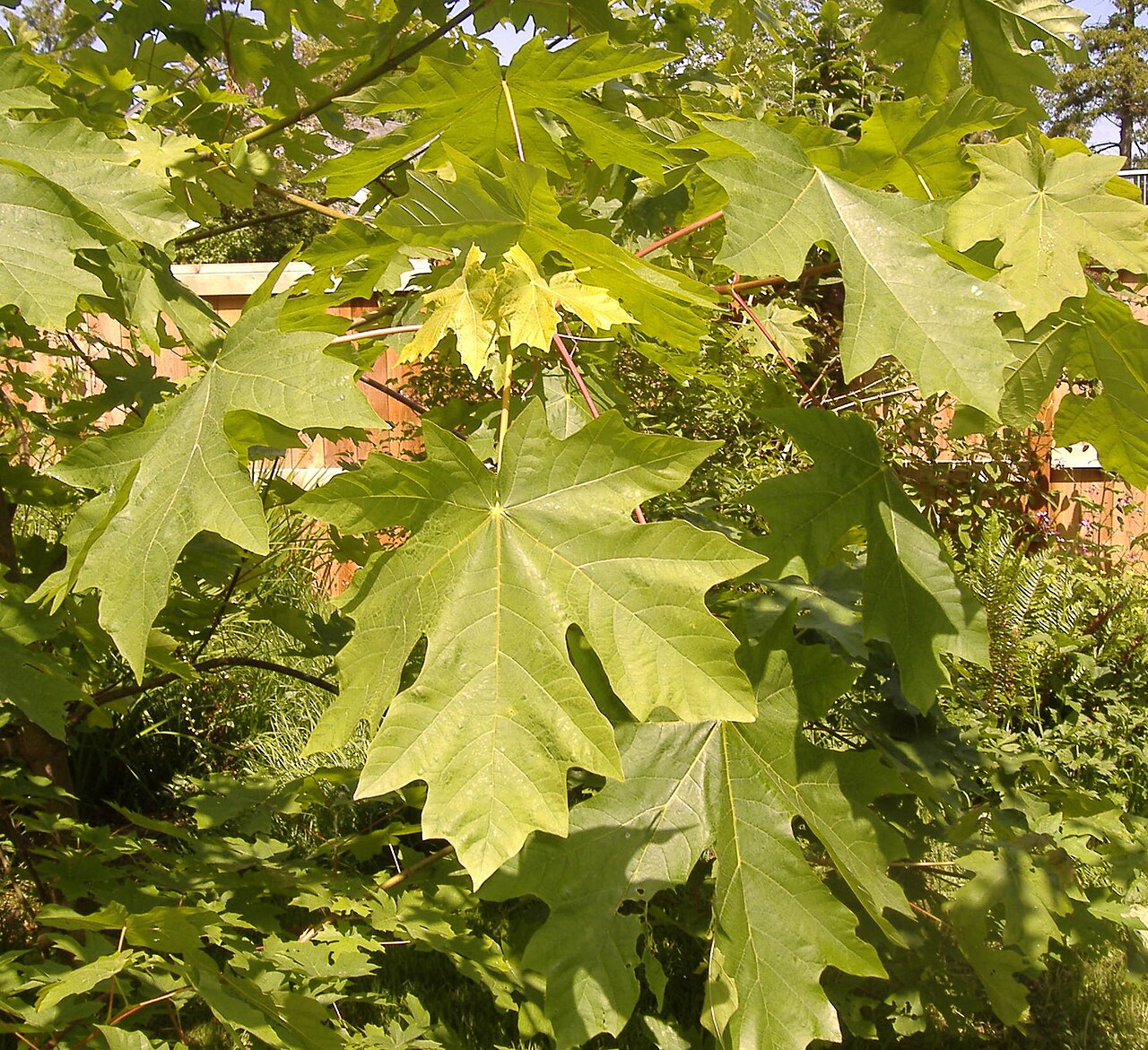 Bigleaf MapleBigleaf Maple · 1205 yd