What is recorded here
Just above the landing place at Cruach na Cara, a granite slab stands with stubby arms projecting from its sides, shaping a vague cross rather than a rigid pillar. Its east face carries a Latin cross with T-shaped terminals and opposed angular spirals at the base, while the west face encloses an openwork cross inside a broken band and anchors a large triquetra knot below. The decorations suggest careful chisel work for a place where arrival and memory still meet. Another recumbent slab lies six metres to the north, waiting to be read in the same light.
Located just above the landing place at Cruach na Cara/St Macdara’s Island, this granite cross-slab (H 0.98m; Wth 0.46m) is beautifully decorated on both faces. Described by Higgins (1987, ii, 348-9, no. 72) as a pillar that has been worked to look vaguely cruciform, short stubby arms project slightly from the sides. The E face bears a large outline Latin cross in false relief with prominent T-shaped terminals. The base terminates in a pair of opposed angular spirals. A roundel is visible at the junction of the arms and shaft and there is a small boss with a central hollow in each of the two upper cantons. Possible conjoined boss-like features are evident in the lower cantons.
The W face bears another Latin cross in false relief that is enclosed in a broken semicircular band. The cross forms an openwork pattern and has subrectangular terminals with two ‘steps’ beneath each arm. There is a rectilinear recess at the junction of the arms and shaft and it contains a boss with a central hollow. Conjoined bosses, similar to those on the E face, are visible in the lower cantons. A large triquetra knot is visible below the cross. Another recumbent cross-slab (GA076-020001-) is visible 6m to the N. (Bigger 1896, 109-110; Crawford 1907, 212, 218)
Compiled by: Olive Alcock
Date of upload: 6 June 2018
Probably dating to the early medieval period, this cross-slab may be associated with St Macdara, reflecting Christian devotion or a memorial function. Its location near a landing place suggests it could have had a ritual or waymarking role in coastal pilgrimage or local tradition.
The monument record does not grant public access. Check the route and ask the landowner before entering private land.
- What survives
- Recorded monument
Places near here
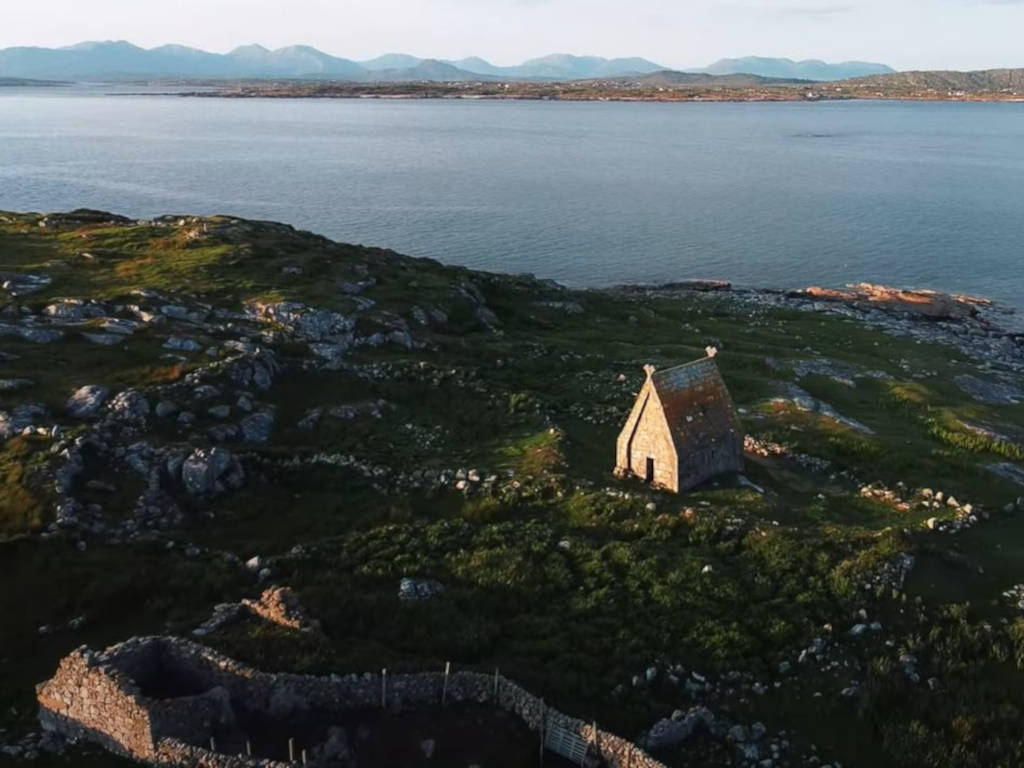 St. MacDara's Island Early Medieval Ecclesiastical SiteHeritage attraction · 29 yd
 Church in ruinsChurch · 55 yd
 Holy WellHoly well · 118 yd
 Oileán Mhic DaraIslet · 170 yd
 Oileán MuiríleachIslet · 312 yd
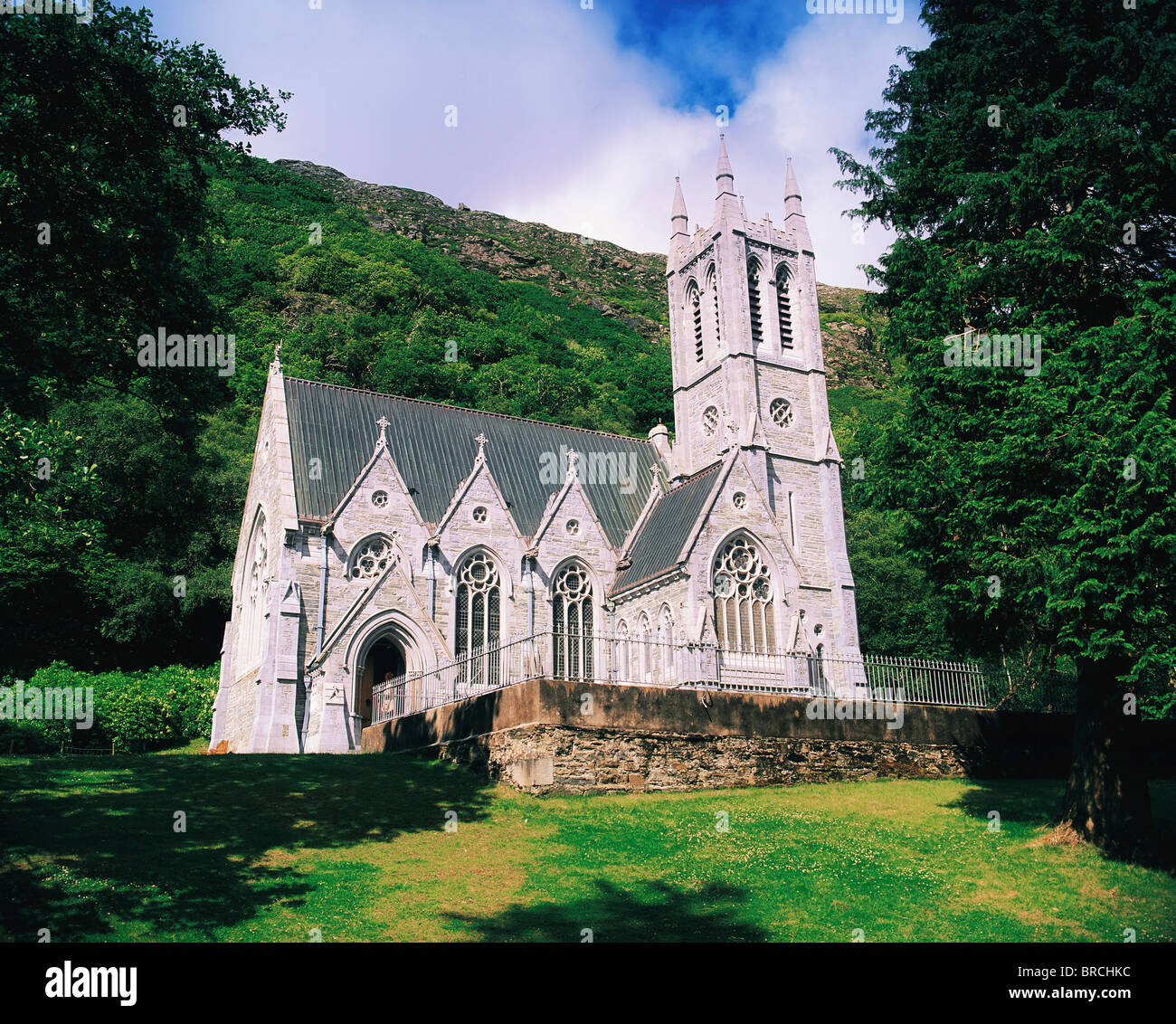 Chapel (in ruins)Church · 1.3 mi
 Ceann MhásaHeadland · 1.5 mi
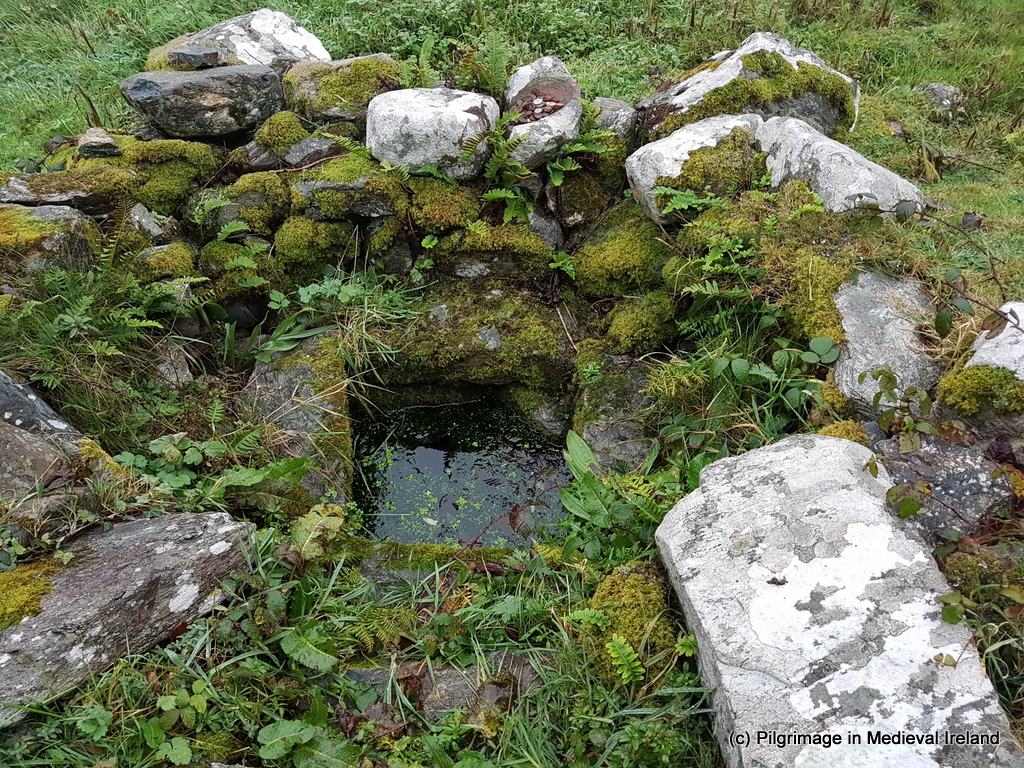 Holy well in An Aird ThiarHoly well · 1.6 mi
 Ard Castle (in ruins)Castle, tower house · 2.0 mi
 Trá MhaíroisBeach / strand · 2.8 mi
 Cnoc GlinsceMountain / peak · 4.9 mi
 Knockboy ForestryForest · 4.9 mi