What is recorded here
Thirty metres southeast of the burial chamber stands a granite boulder carved with a cross and figure, linking the Bronze Age dead to later human hands. The cairn itself holds a central cist where a cremated person and food vessel waited inside a circular chamber, while a secondary urn burial suggests the mound remained active long after its first making. People climbed Tibradden Mountain not merely to observe stones but to participate in memory, perhaps marking loss, honouring ancestors or negotiating with forces they believed dormant within the hill.
Situated on the NW slopes of Tibradden Mountain. A cairn excavated in 1849. Within the cairn a central cist containing a bowl food vessel and cremation enclosed within a circular chamber (diam. c. 3m). The monument was investigated in 1956 as part of conservation works and interpreted as a Bronze Age cairn with centrally-placed cist (Ó hEochaidhe 2003). A partially lintelled passage runs off the chamber in the NNE. A secondary urn burial was found within the cairn (Farrington 1933, 252-4; Price 1940, 121, 133; Waddell 1970, 117). A granite boulder (DU025-023002-) is situated 30m to the SE and is decorated with a cross and figure incised.
This monument was subject to a preservation order made under the National Monuments Acts 1930 to 2014 (PO no. 155/1940). It was subsequently taken into Guardianship by the State.
Compiled by: Paul Walsh and Padraig Clancy
Revised upload on: 8 July 2018
A Neolithic burial cairn, dating to approximately 2500–2000 BCE. Its significance lies in the presence of a central cist with a bowl food vessel and cremated remains, reflecting early funerary practices in the Irish Neolithic.
The monument record does not grant public access. Check the route and ask the landowner before entering private land.
- What survives
- Recorded monument
Places near here
 Tibradden Chambered CairnArchaeological place · 1 yd
 Tibradden MountainMountain / peak · 7 yd
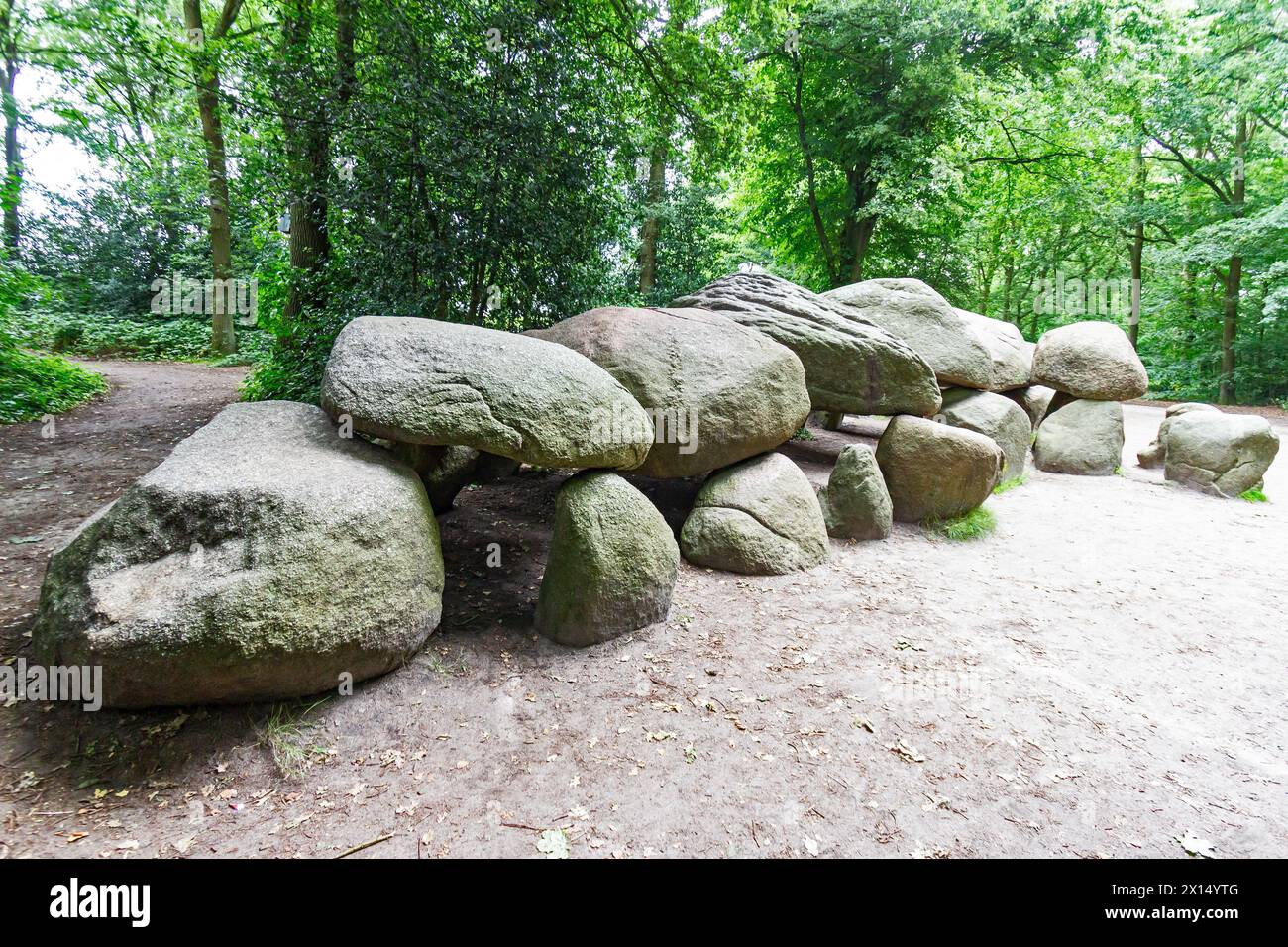 Megalithic structure in Newtown (rathdown By.)Megalithic structure · 104 yd
 Tibradden WoodForest · 322 yd
 O'Connells RockMemorial · 740 yd
 Pine ForestForest · 1095 yd
 Dublin Mountain Way informationVisitor information · 1128 yd
 Cruagh MountainMountain / peak · 1419 yd
 Dublin Mountains Partnership InformationVisitor information · 1535 yd
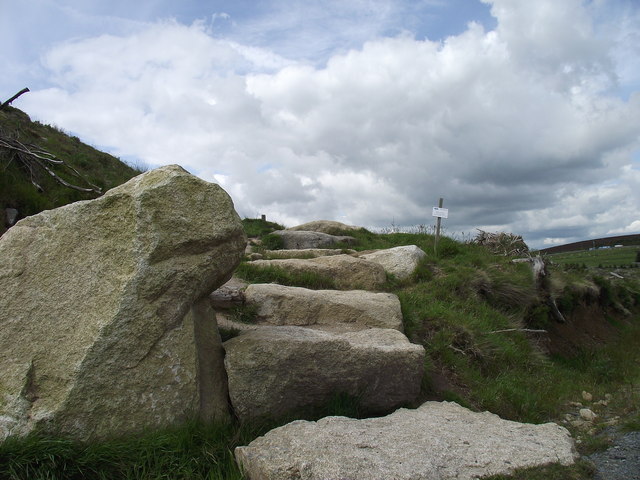 Wicklow WayWalking route · 1.0 mi
 Calbeck CastleRuins · 1.0 mi
 Larch Hillicehouse · 1.0 mi