What is recorded here
Four men and boys lay stacked head-to-toe in a Naas East pit when house builders broke the earth in 1972. They died together, were buried together, and the ground kept that fact sealed until Dalemount testing scattered their bones across a new site in 2020. The dead did not stay where they belonged.
According to Bradley et al. (1986 vol. 4, 373-4), the human remains of four individuals were found in an esker called Gallow's Glen at Naas East (NMI 1972: 85-8). A programme of Archaeological Testing undertaken by Byrne Mullins & Associates at ‘Dalemount’, Dublin Road, Naas, Co. Kildare on 27th May 2020 resulted in the discovery of human remains. The archaeological investigations were undertaken under licence from the Department of Culture, Heritage & the Gaeltacht (No. 20E221) and in response to the requirements of Kildare County Council with respect to the development of the site.
The results of the excavations by Byrne Mullins & Associates was summarised as following; 'The files of the National Museum of Ireland (Reg. Refs: 1972: 85-8) record that human remains were uncovered in May 1972 during site preparation/ground reduction works associated with the construction of a house at Naas East. This site is that to the neighbouring property to the north of the subject proposed development landholding. The discovery, initially considered to be of an animal, was uncovered at a depth of 1m below ground level. The discovery was reported to the National Museum of Ireland and was investigated by Joseph Raftery on 21st May 1972 and was found to be a burial pit containing four inhumations. The burials were recently re-examined and reassessed as part of an NMI Project which determined that Skeleton 1 was a 35-44 year old male; Skeleton 2 was a juvenile of 8-14 years of age; Skeleton 3 was an adolescent male of 14-17 years of age and Skeleton 4 was a young adult male. It was noted that the burial deposition in a head-to-toe fashion (i.e. the upper burials placed on top of the lower burials but in opposite directions) is highly indicative that the individuals were all buried at the same time, presumably as a the results of one episode. The programme of archaeological testing uncovered number clusters of human bone in the eastern area of the overall site, as well as some randomly dispersed individual bone material. Initial investigations indicated that the remains were disarticulated and this was subsequently confirmed by Dr. Clare Mullins, Forensic Archaeologist. All were discovered in a layer of soil fill spread across the eastern surface of the site. While it is presently unclear as to where the remains were originally interred, it is possible that they may be related to the remains uncovered to the north of the site in 1972. No artefactual material was recovered in association with the remains, and it is considered that such are of historical/archaeological origin.'
Compiled by: Gearóid Conroy
Revised by: Caimin O'Brien
Date of revised upload: 3 June 2020
The monument record does not grant public access. Check the route and ask the landowner before entering private land.
- What survives
- Recorded monument
Places near here
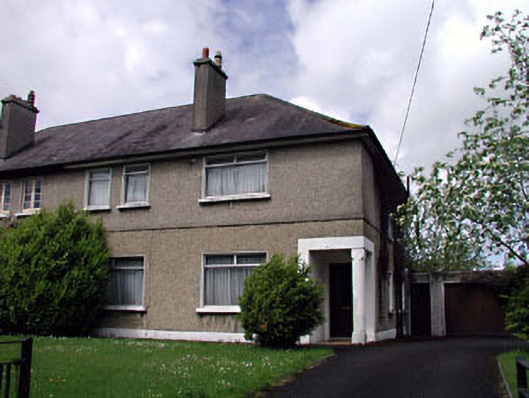 Nagle Househouse · 169 yd
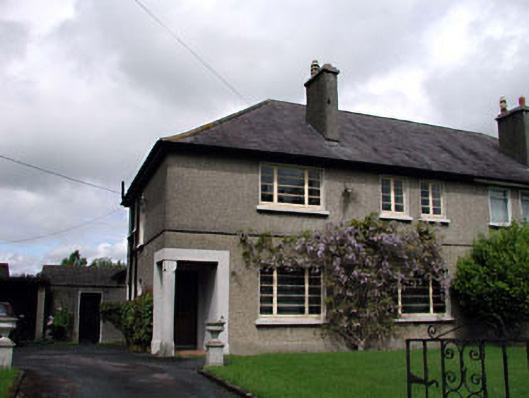 Menapahouse · 177 yd
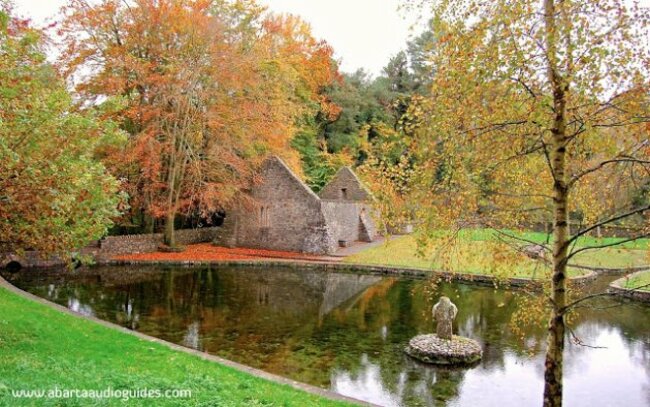 St. Patricks WellHoly well · 664 yd
 Font in Naas WestFont · 742 yd
 Site of Eustace CastleCastle, tower house · 832 yd
 Poplar SquarePicnic place · 840 yd
 Monread District Park WoodsWood · 867 yd
 Site of Black CastleCastle, unclassified · 1019 yd
 Naas ParkWood · 1044 yd
 The Square RenewalMemorial · 6.1 mi
 Councillor Jim MileyMemorial · 6.2 mi
 Cupidstown HillMountain / peak · 6.5 mi