
What is recorded here
Killamery holds two broken bullaun stones beside a high cross, marking a monastery founded by St. Gobán Fionn early in the 7th century. One sandstone boulder lost the base of its circular depression, leaving a hollow that may have caught rainwater or held oil for prayers. The steep drop behind the graveyard reveals St. Nicholas’s holy well and the remains of a church, connecting baptism, burial and worship on one small rise above the plain.
On raised ground at the base of a hill which rises to the S-SE, in rolling pasture overlooking a broad plain from NW-N. The high cross is on a hillock where there are a number of 18th and 19th century headstones. The land drops away steeply immediately S of this hillock to a small valley with St. Nicholas’s holy well (KK030-008007-) c. 10m to the S in this valley. The land rises again immediately S of this, on which rise there are the remains of a church (KK030-008003-). All these monuments are enclosed within the graveyard (KK030-008010-). According to Carrigan (1905, vol. 4, 311-2) a monastery here was founded by St. Gobán Fionn early in the 7th century whose feast day is celebrated on the 6th of December. In the Annals of the Four Masters the obit of an abbot, Domhnall son of Niall is given in 1004 (Edwards 1990, 41). Of the monastic site only a high cross (KK030-008004-), two cross-slabs (KK030-008005-; KK030-008011-), a stone cross (KK030-008013-), the remains of a church (KK030-008003-) and two bullaun stones (KK030-008006-; KK030-008008-) are currently visible at the location.
This bullaun stone is a free-standing sandstone boulder (max. dims. 0.98m x 0.89m; T 0.25m) with a roughly circular depression (diam. 0.37m x 0.39m; D 0.24m), the base of which has broken off, leaving a large hole (dims. 0.26m x 0.25m). It is likely that the bullaun stone was found within the graveyard and placed near the high cross. The adjacent bullaun (KK030-008006-) is likely to be that mentioned by Carrigan (ibid. 315) as a 'font' located 250 yards (c. 228m) upslope to the S of the graveyard.
Compiled by: Jean Farrelly
Date of upload: 2 August 2017
A bullaun stone, likely dating to the early Christian period, often used for ritual or ecclesiastical purposes such as anointing with holy water. It may be associated with the nearby high cross and historic burial ground, suggesting a long-standing site of spiritual or communal significance.
The monument record does not grant public access. Check the route and ask the landowner before entering private land.
- What survives
- Recorded monument
Places near here
 Bullaun stone in KillameryBullaun stone · 1 yd
 Stone CrossCross, High cross · 2 yd
 Killamery High CrossVisitor information · 37 yd
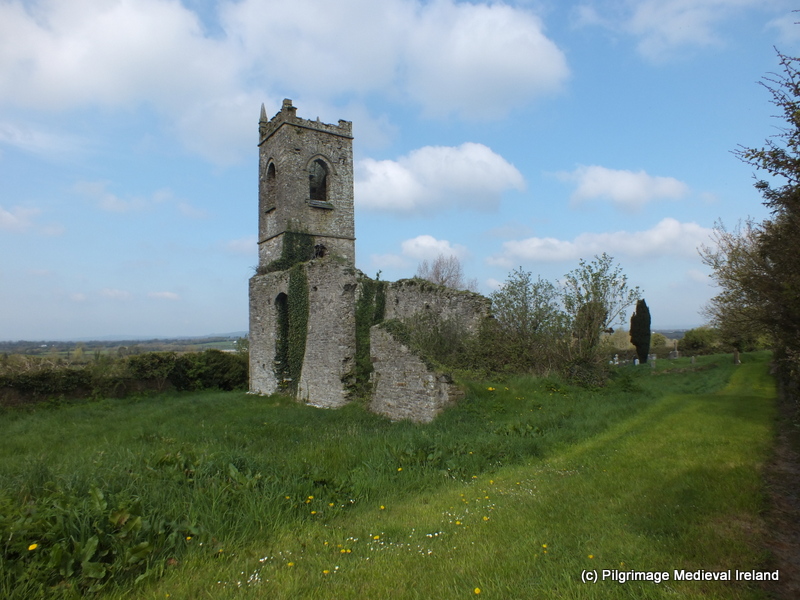 Church (in ruins)Church · 62 yd
 Saint Nicholas's Church (Killamery)church/chapel · 63 yd
 IndicatedCastle, motte · 132 yd
 KillameryVisitor information · 168 yd
 Bawn in GarryrickinBawn · 1.1 mi
 The SpoutMemorial · 1.4 mi
 James (Jim) McKennaMemorial · 1.6 mi
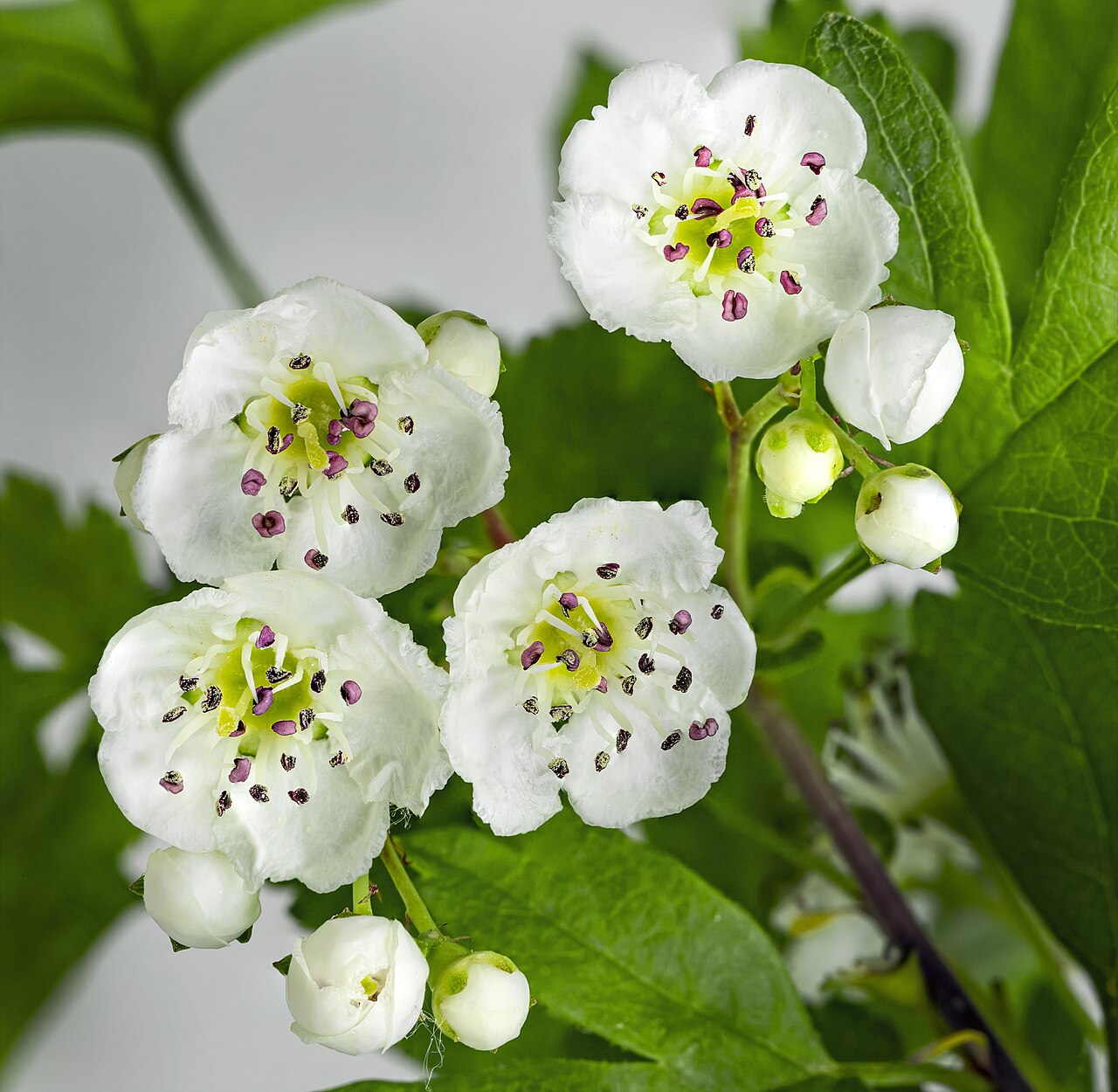 HawthornHawthorn · 3.2 mi
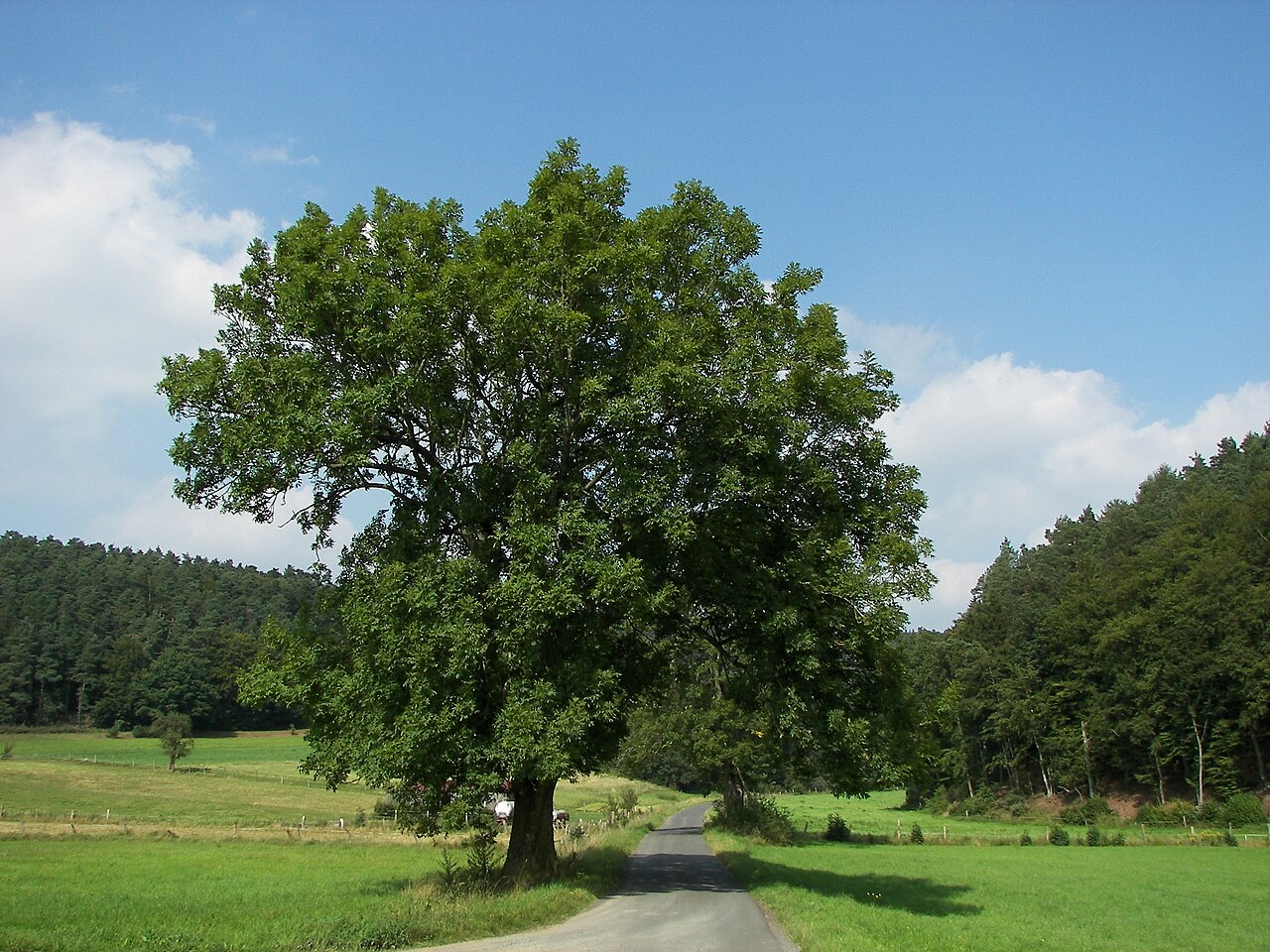 European ashEuropean ash · 3.6 mi
Other information
Photo: A.-K. D. · CC0