What is recorded here
Anglo-Norman soldiers waded through the Abbey River on 30 September 1175, following a ford later called Meiler’s Ford. They broke into Limerick not through gates but under water, guided by Domnall Mac Gilla Pátraic of Ossory after their defeat at Thurles. The battle spilled from the riverbank into the walled city, repeating the violence already seen at Waterford and Dublin. What is remembered as conquest began as men swimming upstream into a living town.
The battle of Limerick in 1175 can be seen as following on from the Anglo-Norman campaign in Munster the previous year, which ended following a serious defeat at the battle of Thurles (1174). The contemporary Annals of Innisfallen date the Anglo-Norman assault on Limerick to 1175. Giraldus does not provide a year, but dates the assault to ‘about’ the kalends of October, also noting that the city, like Wexford, Waterford and Dublin, was taken on a Tuesday. The closest Tuesday to the kalends of October in 1175 was 30 September. Both the Expugnatio and the Song agree that the expedition was led by Raymond le Gros, although both also ascribe a prominent role to Meiler fitz Henry. Unfortunately, the only surviving copy of the Song ends abruptly just before the actual battle of Limerick begins, but it also notes that the Anglo-Normans were led to Limerick by Domnall Mac Gilla Pátraic of Ossory, a detail ignored by Giraldus, but which is also recorded in the annals of Tigernach. The Anglo-Normans, guided by Mac Gilla Pátraic, presumably approached the town from the south, so the section of the Shannon they would have faced was what is now called the Abbey River. ‘Meiler’s Ford’ is a long lost placename, but recent excavations in the bed of the Abbey River carried out by Ed O’Donovan on behalf of Mags Gowen Ltd found the remains of a ford under the modern Baal’s Bridge. This may well correspond to that used by the Anglo-Normans in their assault. The Expugnatio implies that the latter ford was situated close to the eastern extremity of the town, this being the only way in which the city walls could at once overhang the river and provide space for the Hiberno-Norse forces to muster outside the walls, as described above. Once the Anglo-Normans had crossed by the ford, the initial battle would have taken place immediately outside the town defences, with the battle (or perhaps massacre) subsequently extending within the walled area, as also occurred at Waterford and Dublin (both in 1170).
The monument record does not grant public access. Check the route and ask the landowner before entering private land.
- What survives
- Recorded monument
Places near here
 CastleCastle, unclassified · 1 yd
 Six Gun BatteryMonument · 124 yd
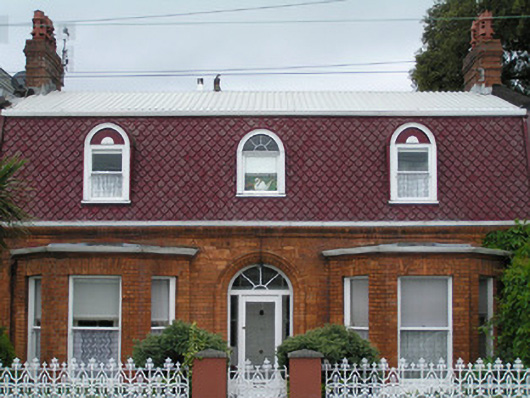 Les Charmilleshouse · 126 yd
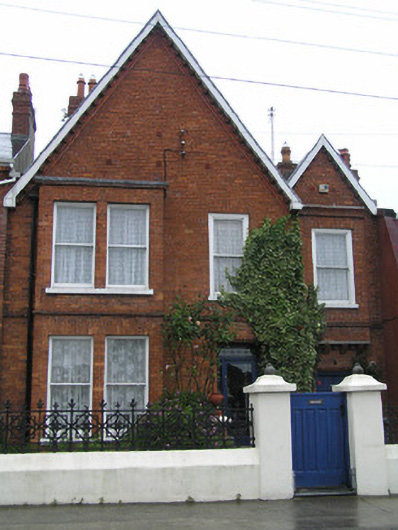 Mignonhouse · 129 yd
 Anthony Foley MemorialMemorial · 135 yd
 Curragower FallsWaterfall · 140 yd
 Heritage FountainMonument · 185 yd
 Hunt MuseumMuseum · 214 yd
 Siege of Limericksiege · 319 yd
 Shannon IslandIslet · 320 yd
 The Treaty StoneMemorial · 321 yd
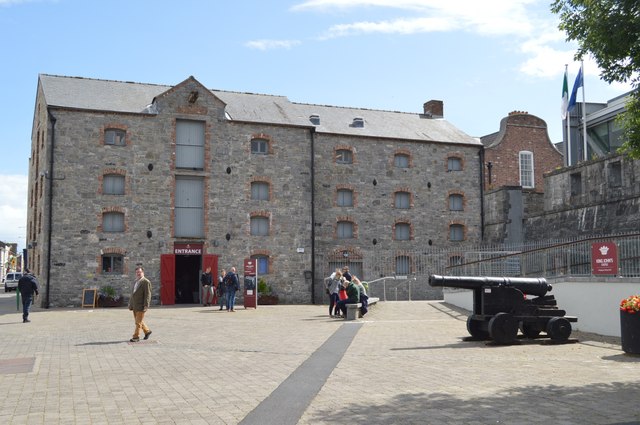 King John's Visitor's CentreMuseum · 333 yd