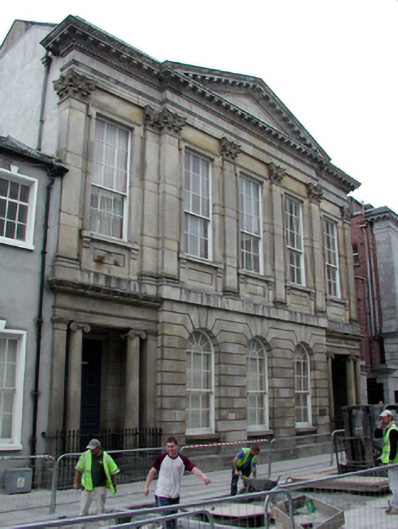
What is recorded here
Terraced five-bay two-storey Classical-style bank, built 1841, retaining original aspect with three-bay two-storey pedimented breakfront. Now in use as offices. Pitched slate roof (gabled to breakfront) with clay ridge tiles, and cast-iron rainwater goods. Granite ashlar wall to front (south-west) elevation with channelling to ground floor, plain stringcourse to first floor, Corinthian pilaster strips to first floor with entablature, and plain frieze over having modillioned moulded cornice and modillioned tympanum to pediment. Unpainted rendered walls to remainder. Round-headed window openings to ground floor with cut-stone sills. 6/6 timber sash windows with fanlights. Square-headed window openings to first floor with cut-stone consoled sills on inscribed panels, and lugged architraves. 9/6 timber sash windows. Square-headed door openings approached by flight of three cut-limestone steps with cut-granite Ionic in antis doorcases having cut-stone pilasters, entablatures, friezes and moulded cornices, and timber panelled double doors. Road fronted with concrete footpath to front and sections of cast-iron railings to entrance bays having Fleur-de-Lys finials.
This bank, which has been very well maintained despite a subsequent change of use, is an imposing substantial composition in a decorative Classical style. The bank, designed by Thomas Jackson (1807 - 1890), is composed of balanced proportions and is a prominent feature in the streetscape of O’Connell Street. The bank retains many important early or original salient features and materials to the exterior, and it is assumed that the interior is similarly intact, incorporating early schemes of importance. The bank is distinguished by the fine cut-stone detailing throughout, which enhances the architectural and design qualities of the composition, and which attests to high quality stone masonry. The bank is also of significance, representing the continued prosperity of the locality in the mid nineteenth century.
This does not grant access. Most recorded buildings are privately owned; view them only from public ground unless the owner allows entry.
Places near here
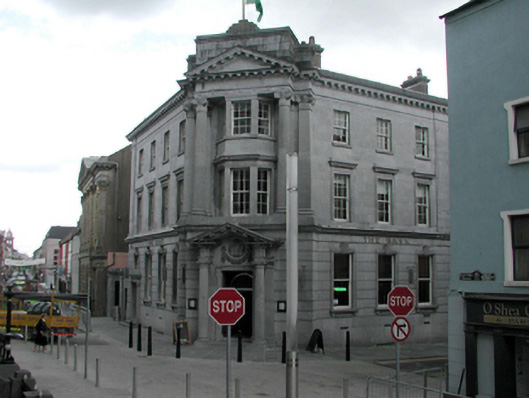 bank/financial institutionbank/financial institution · 31 yd
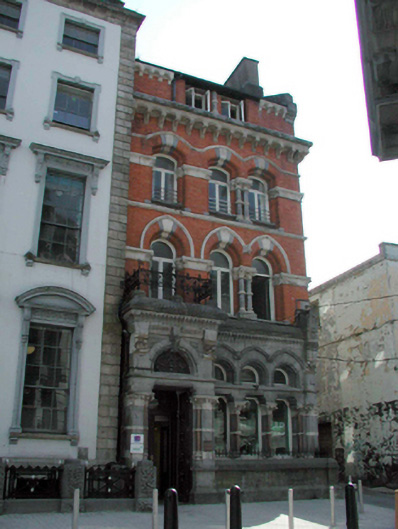 Dolphin Housebank/financial institution · 40 yd
 Beach TowerCastle · 122 yd
 Habitation site in Waterford CityHabitation site · 192 yd
 Clock TowerHeritage attraction · 200 yd
 Slí na SláinteVisitor information · 214 yd
 Holy well in Waterford CityHoly well · 255 yd
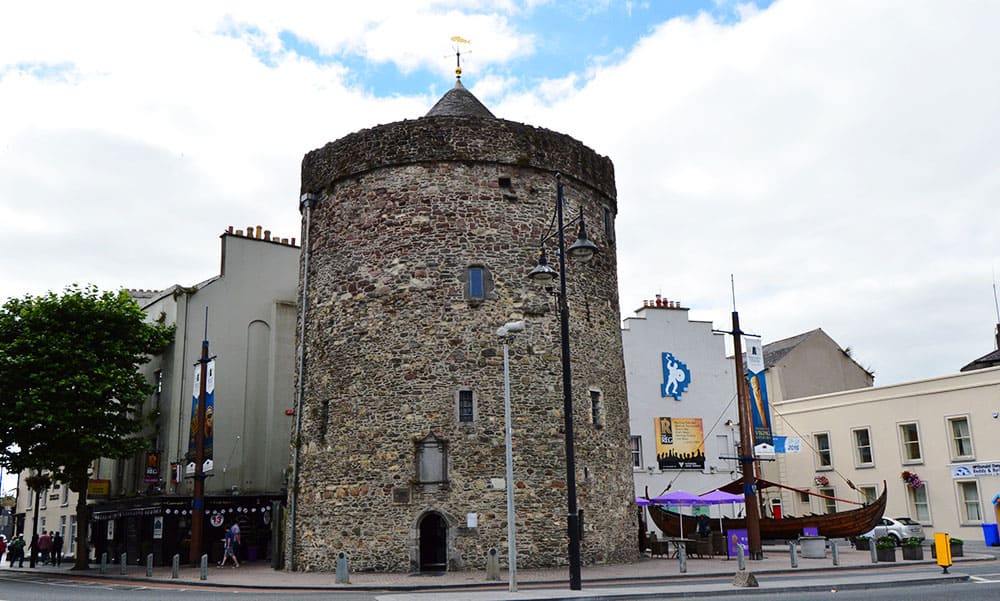 Semi-Lunar TowerCastle · 298 yd
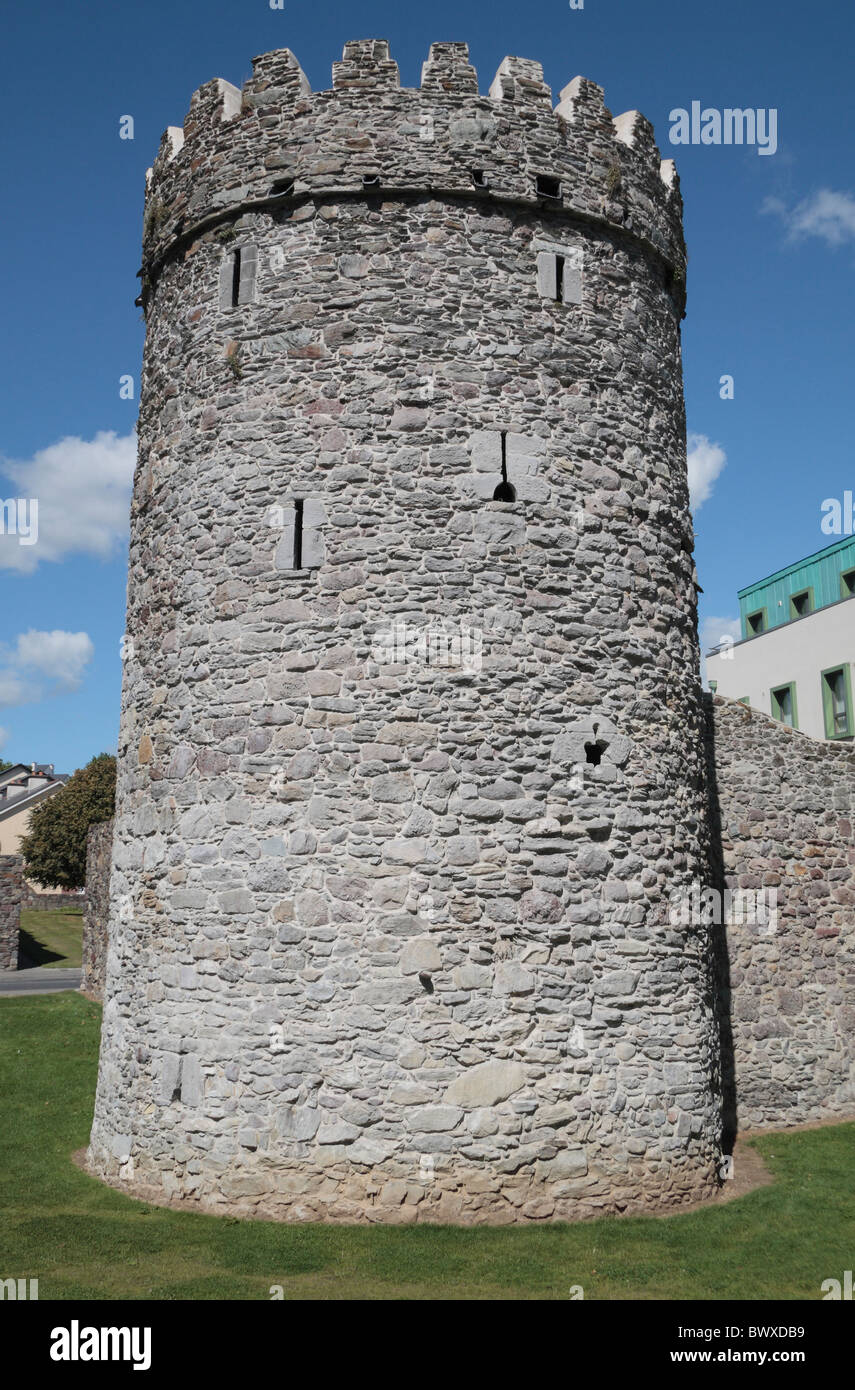 Waterford City WallsVisitor information · 355 yd
 9/11 MemorialMemorial · 554 yd
 Bishop's Palace MuseumMuseum · 571 yd
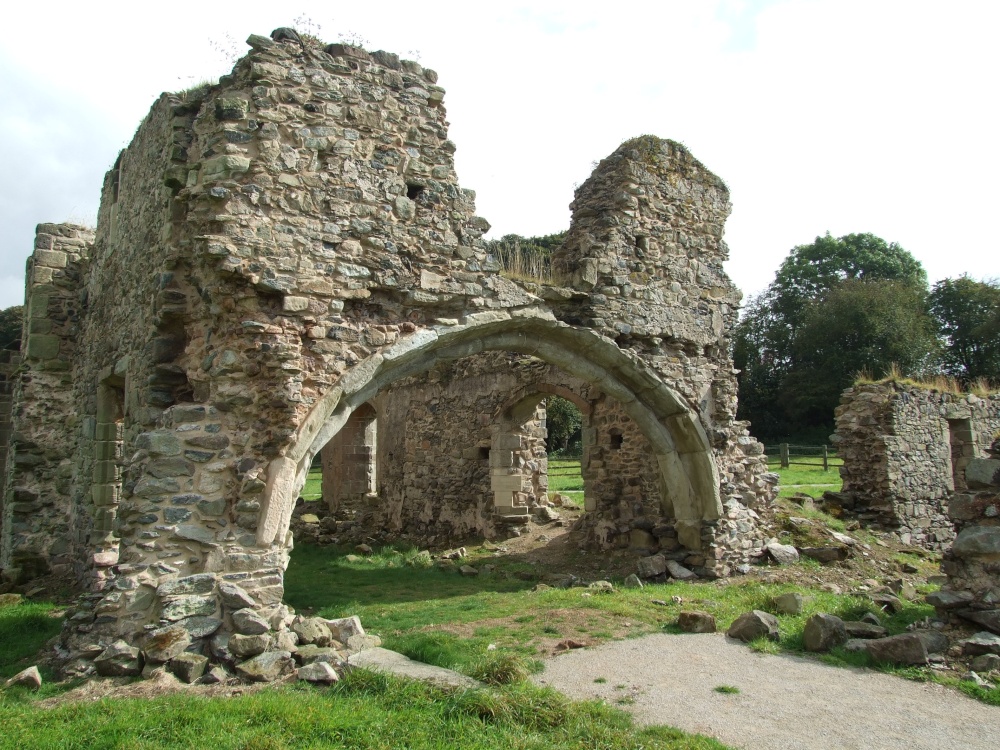 Native Woodland Trust:Grace Dieu ReserveWood · 2.5 mi
Other information
Photo: National Inventory of Architectural Heritage · Website use allowed for educational or private purposes with source credit