What is recorded here
That narrow limestone slab stands two metres from the buried cross base, carrying a bishop whose lace and vestments still show through centuries of rain. He raises one hand in blessing while a barbed serpent fights beneath his feet, perhaps Patrick himself rendered in stone. A shallow groove across the top suggests a small metal cross once caught the light above the carving. The slab now leaves Faughart Upper, but the graveyard keeps the shape of his gesture and the danger lurking at his heels.
This narrow limestone stone slab (1.3m by 18cm by 6cm) was discovered in the graveyard by Henry Morris (Morris 1912) where it served as a grave marker c. 2m northwest of the mound on which stands the base of a possible high cross (LH004-097006-). It is carved, in intaglio style, with the figure of a bishop, in full episcopal panoply, with mitre and crosier, and with his right hand raised in the act of benediction. Underneath the feet of the figure there is a representation of a serpent with tongue barbed and protruding in an attitude of fight: this probably represents St. Patrick. The details of the dress are executed very finely, the lace on the alb and ornamentation on the vestments being clearly seen. There is no inscription. On the top of the stone there is a little groove cut something c. 3cm long in which it would appear a small metallic cross had at one time been fixed. The original function of this slab is unknown and it may have formed part of a more elaborate memorial. The slab was removed to the National Museum of Ireland (see DU018-414----). (Morris 1912)
Compiled by: Paul Walsh
Date of upload: 26 June 2014
The monument record does not grant public access. Check the route and ask the landowner before entering private land.
- What survives
- Recorded monument
Places near here
 CrossCross, High cross · 9 yd
 Grave YardGraveyard · 31 yd
 Church (in ruins)Church · 48 yd
 Faughart MoundCastle, motte · 126 yd
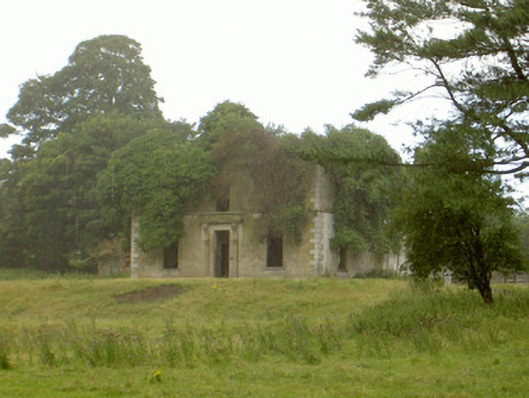 Woodlawnhouse · 611 yd
 Battle of FaughartMajor battlefield · 1049 yd
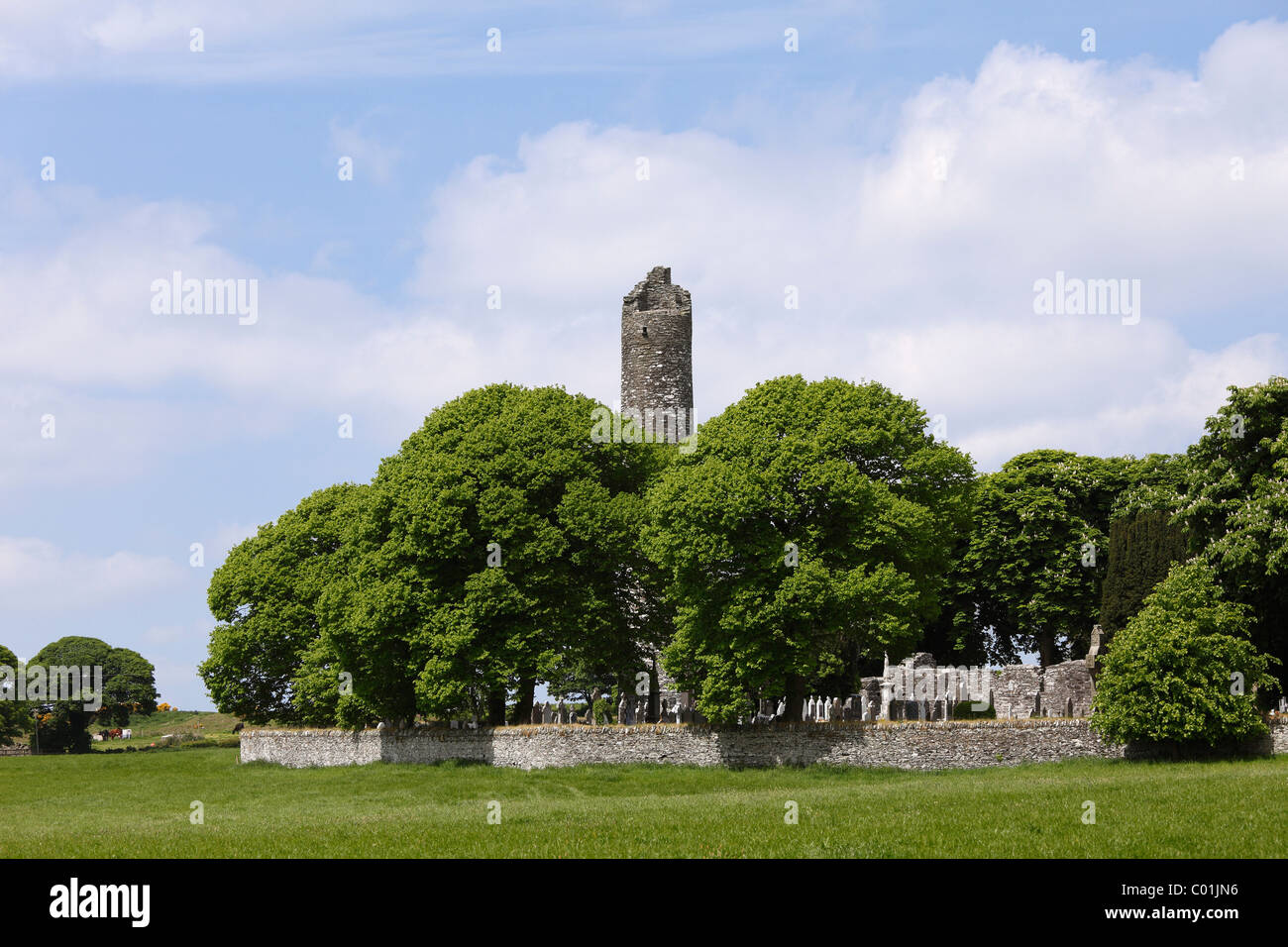 MonascreebeMountain / peak · 1.1 mi
 SlievenaboleaMountain / peak · 1.2 mi
 Raskeagh FortCastle, motte and bailey · 1.2 mi
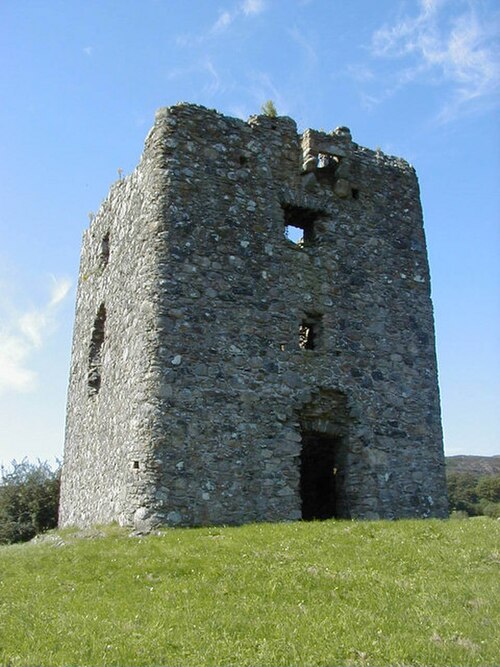 Moyry CastleCastle · 1.3 mi
 KILNASAGGART INSCRIBED PILLAR STONE & CEMETERY with 6 CROSS-CARVED STONES: CELL NA SACART in EdenappaKILNASAGGART INSCRIBED PILLAR STONE & CEMETERY with 6 CROSS-CARVED STONES: CELL NA SACART · 1.4 mi
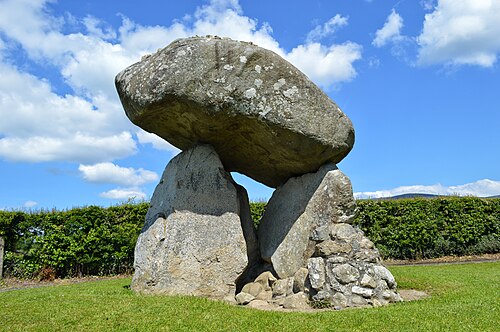 Proleek DolmenArchaeological place · 1.8 mi